Compression, Deepfakes, and the Rise of Local LLMs
Overview
Today's AI conversation pivots around three themes: massive model compression breakthroughs from Google, growing concerns over deep‑fake authenticity, and a surge of community‑driven local LLM projects. Hacker News debates the economics of on‑device AI, while Reddit users grapple with the societal impact of AI‑generated media and celebrate privacy‑first LLM tools.
Hacker News Stories
Flighty Airports
508 points · 170 comments · by skogstokig

Flighty provides a web dashboard that aggregates real‑time disruption data for major airports worldwide, showing delays, cancellations, and ground‑delay alerts. The service is a companion to the iOS app, which offers a subscription‑based “Pro” tier for deeper insights. Users discuss the app’s design, data reliability, and the business model that monetises the otherwise free flight‑tracking service.
Interesting Points
- Flighty’s iOS app runs on a subscription model (weekly, monthly, or annual plans) that reportedly generates roughly $1 M per month in revenue despite the web interface being free.
Top Comment Threads
- culopatin (10 replies) -- The original poster wonders how Flighty can stay free; commenters explain that the iOS app’s subscription fees fund the service and that the web site acts as inbound marketing for the paid product.
TurboQuant: Redefining AI efficiency with extreme compression
451 points · 126 comments · by ray__

Google Research introduces TurboQuant, a set of quantisation algorithms that compress large‑language‑model key‑value caches by up to six‑fold with zero accuracy loss. The method combines a random rotation of vectors (PolarQuant) with a 1‑bit Johnson‑Lindenstrauss transform (QJL) to eliminate hidden errors. Benchmarks on long‑context tasks show up to 8× speed‑ups on H100 GPUs and dramatically lower memory footprints for vector search and KV caching.
Interesting Points
- TurboQuant can quantise the KV cache to just 3 bits without any fine‑tuning, delivering up to 8× faster attention‑logit computation on modern GPUs.
Top Comment Threads
- gavinray (5 replies) -- Explains that the random rotation aligns outliers to simplify geometry and that the QJL step uses a single sign bit to preserve distances, making the compression lossless.
Ensu – Ente’s Local LLM app
310 points · 39 comments · by matthiaswh
Ente releases Ensu, a desktop‑and‑mobile application that runs open‑source LLMs entirely on the user’s device, promising full privacy and offline capability. The blog argues that local models protect users from data harvesting and give them control over AI behaviour. Early adopters note the app’s ease of installation and its integration with Ente’s existing photo‑storage ecosystem.
Interesting Points
- Ensu positions itself as a privacy‑first alternative to cloud‑based assistants, bundling the model runtime with end‑to‑end encrypted photo storage.
Top Comment Threads
- moqster (6 replies) -- User reports switching to Ente Auth for 2FA after hearing about it, praising the open‑source nature and cross‑platform support.
I tried to prove I'm not AI. My aunt wasn't convinced
130 points · 149 comments · by dabinat
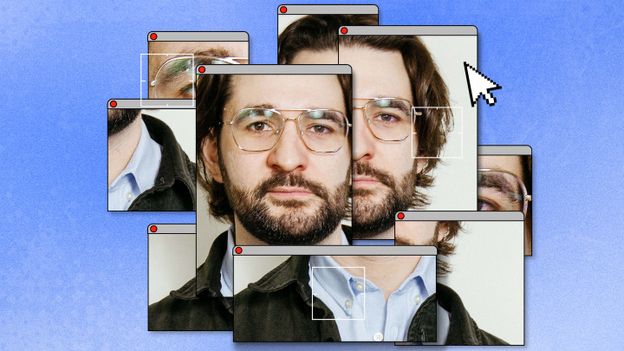
A journalist experiments by calling his aunt with a deep‑fake voice to see if she can tell it’s synthetic. The aunt is 90 % sure it’s real, highlighting how convincing AI‑generated speech has become. The piece expands to discuss broader societal risks of deep‑fakes in politics, legal evidence, and everyday trust.
Interesting Points
- Even a prime minister has struggled to prove they are not a deep‑fake, underscoring the imminent erosion of trust in video and audio media.
Top Comment Threads
- a2128 (10 replies) -- Warns that deep‑fakes will cripple economic interactions because people will no longer trust video calls, forcing costly in‑person verification.
How to Keep ICE Agents Out of Your Devices at Airports
83 points · 128 comments · by cdrnsf
The Intercept outlines tactics for travelers to protect their smartphones from ICE surveillance at U.S. airports, including using burner phones, disabling cellular data, and employing encrypted messaging. The article notes recent incidents where ICE agents used TSA data to detain travelers and argues that privacy‑preserving habits are essential for civil liberties.
Interesting Points
- One suggested defense is to ship a stripped‑down phone ahead of travel and only activate it once you’re in the airport terminal.
Top Comment Threads
- seethishat (11 replies) -- Advocates abandoning phones entirely while traveling, arguing that a phone‑free trip is the only foolproof way to avoid ICE monitoring.
Reddit Stories
Nobody seems to care that "reality" is coming to an end?
376 points · 659 comments · r/ArtificialInteligence · by u/alazar_tesema

A speculative post asks whether AI is pushing humanity toward a post‑reality era where objective truth erodes. The community debates philosophical, ethical, and practical consequences of living in a world saturated with synthetic media.
Interesting Points
- A top comment likens the feeling of alienation to Marx’s concept of alienation, suggesting AI is stripping away human agency.
Top Comment Threads
LLMs won’t take us to AGI and this paper explains why
346 points · 222 comments · r/ArtificialInteligence · by u/HotelApprehensive402
The poster shares a new arXiv paper arguing that large language models lack the ability to learn from real‑world experience, limiting them from achieving artificial general intelligence. The paper emphasizes that LLMs are fixed after pre‑training and that prompting or fine‑tuning does not constitute true learning.
Interesting Points
- The authors claim that LLMs cannot update their internal representations after deployment, making them fundamentally unsuitable for AGI.
Perplexity CEO says AI layoffs aren’t so bad because people hate their jobs anyways
213 points · 199 comments · r/ArtificialInteligence · by u/fortune
Perplexity AI’s CEO makes a controversial statement that recent AI‑related layoffs may be a “glorious future” because many workers already dislike their jobs. The post sparked heated debate over corporate responsibility and the human cost of AI automation.
Interesting Points
- The CEO suggests that AI‑driven layoffs could improve overall job satisfaction by removing people from undesirable positions.
She Has 1 Million Followers and Photos with Trump—But She’s AI
164 points · 44 comments · r/ArtificialInteligence · by u/playboy
A deep‑fake influencer with a million followers is revealed to be entirely synthetic, sparking discussion about the ethics of AI‑generated personas and the potential for manipulation in political discourse.
Interesting Points
- The account amassed a massive following before anyone realized it was an AI‑generated avatar.
The "AI will automate all white collar work" crowd has a serious blind spot
105 points · 65 comments · r/ArtificialInteligence · by u/Minute-Buy-8542
The poster argues that predictions about AI automating all white‑collar jobs ignore macro‑economic constraints and the historical pattern of technological disruption being absorbed rather than eliminated.
Interesting Points
- Highlights that past hype cycles (dot‑com bubble, crypto) each claimed total industry disruption but ultimately only reshaped specific niches.
Quick Mentions
- Meta Is Cutting Several Hundred Jobs Amid Record AI Spending (5 points · discussion · HN) -- Meta announced layoffs affecting several hundred employees as the company ramps up AI research spending.
- Apple App Store Is Flooded with AI Slop and Legitimate Developers Are Paying (5 points · discussion · HN) -- Forbes reports that AI‑generated apps dominate the App Store, forcing genuine developers to spend on marketing to stay visible.
- Why colleges are turning to oral exams to combat AI (5 points · discussion · HN) -- Colleges experiment with oral examinations to ensure students can demonstrate knowledge beyond AI‑generated written work.
Report generated in 5m 20s.