US Government Takes Control of Frontier AI Access
Overview
Today's AI conversation is dominated by the US government's unprecedented move to regulate access to frontier models like Anthropic's Mythos 5 and OpenAI's GPT-5.6 through a trusted-partner licensing system. Meanwhile, the mathematics community grapples with AI's growing role in proof discovery, and local AI enthusiasts celebrate new audio runtimes and long-context models.
Hacker News Stories
U.S. allows Anthropic to release Mythos AI to 'trusted' US organizations
359 points · 358 comments · by bobrenjc93

The US Commerce Department lifted its export control block on Anthropic's Claude Mythos 5 model, allowing it to be released to over 100 US institutions including major companies and government agencies. Commerce Secretary Howard Lutnick cited 'significant progress' in daily talks between the government and Anthropic since the two-week-old block. The letter establishes a new regulatory framework where a trusted partner list replaces individual export licenses, though it remains silent on the weaker Fable 5 model. This comes the same day OpenAI released GPT-5.6 to a short list of government-approved partners.
Interesting Points
- The US government lifted its block on Anthropic's Claude Mythos 5 after just two weeks of intense daily talks
- Over 100 US institutions, including major companies and government agencies, can now access the model without individual export licenses
- The framework gives the US government control over the release of frontier AI models, with European allies expressing frustration at their new dependence on Washington
- The letter is silent on Fable 5, a weaker version that was briefly the most powerful AI model widely available to consumers
Top Comment Threads
- kristopolous (18 replies) -- Mocked the contradiction of the Republican party claiming to be the party of free markets and small government while implementing AI licensing. Replies note the entire party is aligned with Trump's approach and that this has been consistent behavior.
- tracerbulletx (6 replies) -- Argued that imposing a licensing system on models for limiting domestic use should require an act of Congress, well past the red line. Counter-arguments cite precedent from regulatory agencies limiting other products, but the consensus is that explicit Congressional delegation is needed.
- jandrewrogers (4 replies) -- Noted the authority under which this was done has been operative for decades through the Defense Production Act and Export Control Reform Act. Anyone working on frontier dual-use technologies will be familiar with the legal regime. The only change is media coverage.
- alanwreath (6 replies) -- Suggested the US government is flailing and providing free publicity for Anthropic by essentially saying nothing else is as powerful. Replies debate whether the administration is genuinely concerned about risks or just collecting tribute.
- mlinsey (5 replies) -- Asked whether a company not on the trusted partner list would have standing to sue over the export control being illegal and putting them at a competitive disadvantage. Replies explain that while legally possible, the practical consequences of ignoring US export control laws (fines, prison) make it unfeasible for trillion-dollar companies.
The AI industry is pouring millions into US elections
114 points · 82 comments · by speckx
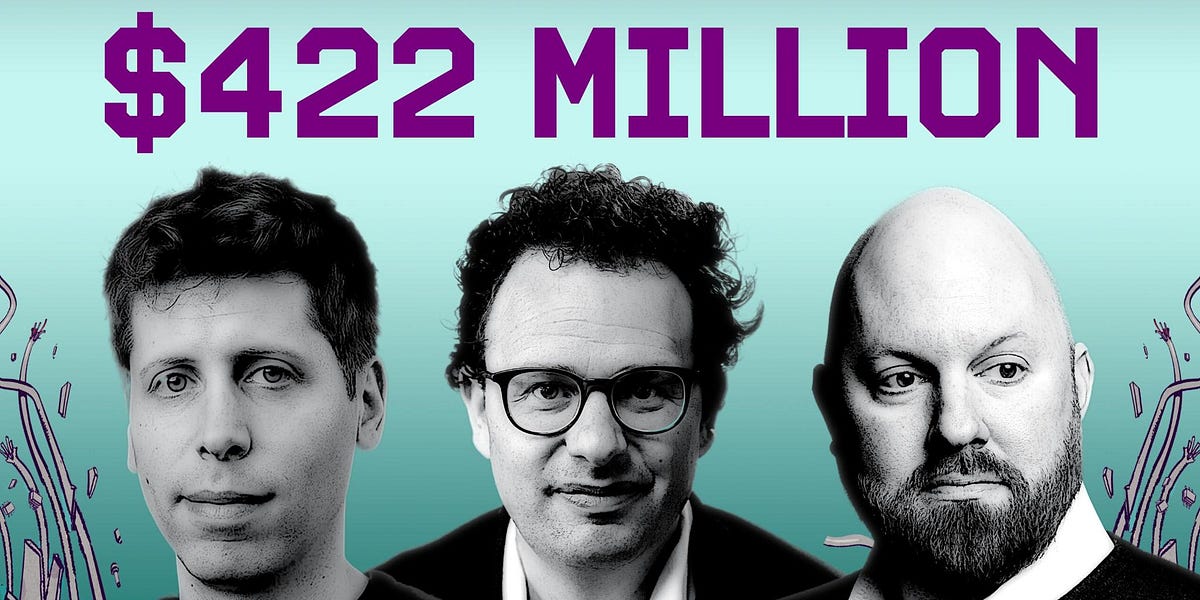
Brian Merchant's Blood in the Machine newsletter launches a new podcast featuring Molly White of Citation Needed, discussing the ballooning influence of AI and crypto money in politics. The episode covers Tech Influence Watch, an ongoing project tracking hundreds of millions of dollars being spent by AI and crypto companies to sway elections. The piece also touches on growing resistance to AI data centers, worker organizing in Silicon Valley, and the broader anti-AI movement.
Interesting Points
- AI and crypto companies are spending hundreds of millions of dollars to influence US elections this cycle
- Molly White launched Tech Influence Watch, a project tracking political spending by AI and crypto companies
- The coordinated network 'Leading the Future' channels money through Democratic-facing Think Big and Republican-facing American Mission, drawing on backers including Andreessen Horowitz and OpenAI president Greg Brockman
- Growing resistance includes protests against AI data centers, worker organizing in Silicon Valley, and anti-AI campaigns in schools
Top Comment Threads
- doodlebugging (3 replies) -- Called for tight regulation of AI-aligned companies and their products, noting that bribery buys state laws in Texas. Suggested that anyone at AI companies attempting to influence elections should face the harshest consequences including confiscation of personal assets.
- ChrisArchitect (2 replies) -- Shared the Tech Influence Watch site and noted that one of their reps received an absurd amount of money from 'Think Big,' part of the 'Leading the Future' network of AI-industry super PACs working to head off stricter AI regulation.
- gruez (4 replies) -- Clarified that 'corporations are people too' doesn't mean they can vote, just that they can conduct transactions and sue/be sued. A commenter noted that corporations can actually vote in some Delaware towns if they own land, and can create shell companies to multiply their votes.
- ausbah (4 replies) -- Joked about AI agents getting voting rights. Replies discussed people asking their AI who to vote for, Grok potentially offering ballot help, and candidates using AI to write policy stances and dynamic stump speeches.
- jlarocco (2 replies) -- Quoted 'Voting with your Wallet - the American way.' Replies noted that the rich get more votes this way and that the problem is you can't really limit money without limiting speech under current constitutional interpretation.
AI in mathematics is forcing big questions
102 points · 69 comments · by rbanffy

IEEE Spectrum explores how AI is transforming mathematics, from Google DeepMind's Aletheia autonomously producing Ph.D.-level research to OpenAI's model disproving an important conjecture in combinatorial geometry. The article examines three emerging visions: AI as a tool, AI as a collaborative partner (championed by Terence Tao's 'big mathematics' concept), and AI as an autonomous oracle. Mathematicians debate whether AI proofs that humans can't understand are still meaningful, and whether the field risks becoming elitist if only organizations with access to proprietary AI can participate.
Interesting Points
- Google DeepMind's Aletheia autonomously produced publishable Ph.D.-level research in arithmetic geometry, while OpenAI's model recently disproved an important conjecture in combinatorial geometry
- Math Inc.'s reasoning agent Gauss formalized Viazovska's Fields Medal-winning sphere-packing proof in days and autonomously formalized the 24-dimensional case in two weeks
- Fields Medalist Terence Tao envisions 'big mathematics' — large-scale decentralized collaborations between humans and machines where formal verification replaces trust based on reputation
- The mathematics community is developing guidelines for AI use in research, with concerns about accessibility, motivation, and intellectual atrophy among students
Top Comment Threads
- fiforpg (5 replies) -- Quoted Wigner: 'It is nice to know that the computer understands the problem, but I would like to understand the problem, too.' Replies discussed how formal proof assistants like Lean can verify AI-generated proofs mechanically, though converting informal proofs to formal code still requires expertise.
- glouwbug (4 replies) -- Observed that you have to be Terence Tao to know when an LLM is right or wrong in mathematics. Replies drew parallels to coding — you need to be a good engineer to understand well-generated LLM code.
- paulpauper (4 replies) -- Argued that no AI can tell you if a proof is correct — it can produce a convincing-looking proof with subtle errors. The workflow involves human mathematicians crafting prompts, interpreting results, and verifying with tools like Lean. For every Erdős problem that captures headlines, there are many failures and untold hours of token burn.
- therobots927 (4 replies) -- Questioned how AI improves the situation of verifying extremely long and complex proofs. Replies noted AI's main utility is in the search/creativity step, not verification, and that Wiles' original Fermat proof also contained errors found by reviewers.
- jdw64 (3 replies) -- Described a pattern of building abstraction layers: tests for code, tests for tests, formal verification for tests. Asked whether human mathematicians might eventually end up doing proofs for proofs. Replies connected this to interactive proof systems from complexity theory.
The AI backlash is only getting started
89 points · 260 comments · by andsoitis
The Economist's leadership argues that the growing backlash against AI is just beginning, driven by the technology's potential to replace vast swaths of labor. The piece examines the tension between AI's promised productivity benefits and the real anxiety it generates among workers whose livelihoods are threatened. It notes that the backlash extends beyond software engineers to society at large, with data center construction facing fierce local opposition and AI's encroachment into schools and offices meeting resistance.
Interesting Points
- The article argues the AI backlash is driven by the technology's potential to replace vast swaths of labor, not just overhype
- Data center construction faces fierce local opposition — more Americans say they'd rather have a nuclear reactor next door than a data center
- The backlash extends beyond tech workers to society at large, with AI's encroachment into schools and offices meeting organized resistance
- The piece frames the debate around whether AI provides net benefit overall, noting that previous technological displacements also entailed social unrest
Top Comment Threads
- dwa3592 (11 replies) -- Argued that people are angry because influential figures like Dario, Sam, and Elon have made them believe AI will replace them. Described the emotional impact on workers like taxi drivers facing automation. Replies noted this is an arms race driven by incentive structures, not malice.
- Jcampuzano2 (7 replies) -- Countered that billions of jobs have been replaced by technology throughout history, and the question should be whether AI provides net benefit overall. Comparisons to the printing press were made, though replies noted the speed and scope of AI displacement is fundamentally different.
- beej71 (2 replies) -- Argued that AI companies simply don't include workers in their equation — the pitch isn't to workers, we're passive listeners. The anger against AI/tech is just starting, and this seems like a safe bet.
- eventinbox (9 replies) -- Suggested people conflate 'AI is overhyped' with 'AI is useless' and neither is quite right — the backlash is mostly against the hype cycle, not the tech itself. Gave a 2-year timeline for maturation.
- vitorfblima (5 replies) -- Argued the untold promise of AI is to replace labor entirely — that's the only reason trillions are being invested. Mere tools would never justify this kind of spending. The comparison to tractors was debated, with replies noting AI targets ALL labor, not just specific sectors.
Enterprise AI customers pulling back from OpenAI and Anthropic as costs mount
4 points · 5 comments · by toomuchtodo
Enterprise customers are beginning to rein in their AI spending as the costs of running large language models at scale strain budgets. Companies that went all-in on AI solutions across multiple problems are now reassessing their approach, with some turning to smaller distilled models that offer better cost-performance tradeoffs. The trend follows previous discussions about AI's affordability crisis and companies struggling to justify the ROI on massive token consumption.
Interesting Points
- Companies are pulling back from OpenAI and Anthropic as the costs of running LLMs at scale strain enterprise budgets
- Small distilled models are emerging as a winner for cost-conscious enterprises seeking better ROI
- The pullback follows a period where companies deployed AI solutions to as many problems as possible, often driven by investor pressure rather than clear business cases
- This trend connects to earlier discussions on Hacker News about AI's affordability crisis and companies struggling to justify massive token consumption
Top Comment Threads
- seanmcc (2 replies) -- Asked why every company seems to have a vested interest in AI succeeding beyond just cutting wage bills. Replies confirmed it's mostly about being seen as onboard with the latest trend to appease investors, either their own or their customers'.
- ChrisArchitect (0 replies) -- Linked to related HN discussions about companies reinining AI usage as costs strain budgets and AI's affordability crisis, noting these are ongoing themes.
Reddit Stories
Japanese animator using Seedance to render anime from simple 3D models
2690 points · 361 comments · r/singularity · by u/PointmanW

A Japanese animator with over 10 years of industry experience, including work on TRIGUN STAMPEDE and TRIGUN STARGAZE, is using Seedance to render anime from simple 3D model inputs. The technique produces results that some viewers say look better than normal CGI in anime, and represents a potential new workflow for blending 3D and 2D animation.
Interesting Points
- The animator Tetsurou has worked in the anime industry for over 10 years, most recently on TRIGUN STAMPEDE and TRIGUN STARGAZE
- The technique uses Seedance to render anime from simple 3D model inputs, potentially streamlining the 3D/2D blending process
- Some viewers note it looks better than normal CGI in anime, though others see it as a workflow tool rather than a replacement for traditional animation
Top Comment Threads
- u/krazzel (519 points · permalink) -- Said this is the way to do proper long-format video with consistent world-building. A reply noted it's similar to current animation techniques and that AI tools can lead to efficiency gains and new techniques that artists will take advantage of in their workflow.
- u/PointmanW (340 points · permalink) -- Provided credit to the animator Tetsurou and noted his 10+ years of industry experience, asking whether this level of intentionality and creative input qualifies as art.
- u/NohWan3104 (217 points · permalink) -- Said it looks better than normal CGI in anime and dismissed the 'is it art' debate as gatekeeping. Noted that the TRIGUN reboot's art style wasn't its strongest aspect.
Yann LeCun says xAI is a failure
975 points · 207 comments · r/singularity · by u/Formal-Assistance02

Yann LeCun has publicly stated that xAI is a failure. The post sparked discussion about whether LeCun's assessment is fair, with some noting that xAI fired its staff and had to rent out its excess compute, while others pointed out that Meta AI faces similar challenges. A commenter noted LeCun spent 12 years on Meta AI before leaving.
Interesting Points
- Yann LeCun publicly declared xAI a failure
- xAI reportedly fired its staff and had to rent out its excess compute infrastructure
- The discussion highlighted the contrast between Musk's industrial achievements (SpaceX) and his media ventures (X.com), suggesting xAI falls into the latter category with no clear business model
Top Comment Threads
- u/Howdareme9 (359 points · permalink) -- Confirmed xAI is a failure, noting Musk fired everyone and had to rent out excess compute. A detailed reply analyzed Musk's dual personas as industrialist vs. ideologue, suggesting xAI's infrastructure (Colossus) has a business case even if the Grok app doesn't.
- u/Normaandy (212 points · permalink) -- Said Meta AI is also a failure. A reply noted LeCun isn't working for Meta, but another pointed out he spent 12 years on Meta AI.
US Govt to individually approve who gets GPT 5.6.
1128 points · 565 comments · r/LocalLLaMA · by u/AtlanticHM

The US government will now individually approve which organizations and individuals get access to GPT 5.6, following the same regulatory framework being applied to Anthropic's Mythos 5. The post generated significant discussion in the local AI community about the implications for open-source models, with many pointing to Chinese alternatives like GLM as beneficiaries of this policy.
Interesting Points
- The US government will individually approve who gets access to GPT 5.6, creating a licensing system for domestic frontier model access
- The local AI community is concerned about the implications for open-source models, with speculation that HuggingFace could be targeted next
- Many commenters see this as pushing users toward Chinese AI providers like GLM, which would be unaffected by US export controls
Top Comment Threads
- u/Clean_Hyena7172 (784 points · permalink) -- Quipped 'GLM go brrr,' suggesting Chinese models will benefit from US restrictions. A reply added the famous advice: 'never stop your enemy when they are making a mistake.'
- u/nomorebuttsplz (702 points · permalink) -- Asked how long until HuggingFace is shut down. A reply noted that people will finally rediscover why torrents exist.
audio.cpp: 12 audio models (Qwen3-TTS, PocketTTS, VeVo2 etc) in 1 C++/ggml runtime — TTS up to 5x faster than Python on CUDA
355 points · 124 comments · r/LocalLLaMA · by u/Acceptable-Cycle4645

A new C++/ggml-based runtime called audio.cpp brings 12 audio models including Qwen3-TTS, PocketTTS, and VeVo2 into a single unified runtime. The project aims to solve the fragmentation problem in local audio model deployment, where each TTS repo typically requires its own pinned PyTorch version and cursed Gradio setup. TTS inference is reportedly up to 5x faster than Python on CUDA.
Interesting Points
- audio.cpp unifies 12 audio models (Qwen3-TTS, PocketTTS, VeVo2, etc.) into a single C++/ggml runtime
- TTS inference is up to 5x faster than Python on CUDA
- The project addresses the fragmentation problem where each audio model repo requires its own pinned dependencies, making deployment a headache
- The developer plans to create a universal library for text-to-audio models, extracting common components into a shared framework
Top Comment Threads
- u/CoUsT (50 points · permalink) -- Noted it's crazy that there wasn't something like llama.cpp for LLM audio or ComfyUI for image gen audio earlier. Every TTS AI was a headache to set up. Will keep an eye on the project.
- u/Chrono-Ctkm (10 points · permalink) -- Highlighted that the single-runtime-instead-of-12-python-envs angle is the real win. Asked about quantization support beyond fp16.
A debugger for RL reward functions that detects reward hacking during training
153 points · 15 comments · r/MachineLearning · by u/BaniyanChor

A new tool provides an 'htop-like' interface for debugging reinforcement learning reward functions, detecting reward hacking during training. The tool monitors reward components to identify when the policy is exploiting the reward function in unintended ways. The community praised the approach while noting that reward hacking is fundamentally a specification problem — the optimizer is doing its job on a proxy the developer under-specified.
Interesting Points
- The tool provides an htop-like visualization for RL reward functions, making it easier to detect reward hacking during training
- It monitors reward components including variance collapse, length drift, slope changes, and component imbalance
- The community noted that reward hacking is fundamentally a specification problem — the optimizer optimizes the proxy reward, not the true objective
Top Comment Threads
- u/idiotsecant (17 points · permalink) -- Noted the monkey-paw problem: your anti-reward-hack function is now part of the reward function and can itself be hacked around.
- u/anonymous_amanita (15 points · permalink) -- Praised the tool, saying 'I love that it has an htop feel to it.'
- u/built_the_pipeline (9 points · permalink) -- Provided a nuanced critique: the indicators catch symptoms in the reward's own distribution, but a clean exploit can keep that distribution looking healthy while the policy games something you never meant to reward. Recommended pairing with held-out evaluations on the actual objective.
Aleph Neuro and its partner, Butterfly Network claims it has produced the highest-resolution 3D images of the human brain ever obtained from outside the skull using ultrasound-on-a-chip
700 points · 46 comments · r/singularity · by u/Distinct-Question-16
Aleph Neuro and Butterfly Network claim to have produced the highest-resolution 3D images of the human brain ever obtained non-invasively, using ultrasound-on-a-chip technology. The breakthrough could have significant medical applications, including early detection of brain abnormalities like AVMs that currently go undetected until they rupture.
Interesting Points
- Aleph Neuro and Butterfly Network claim the highest-resolution 3D brain images ever obtained from outside the skull
- The technology uses ultrasound-on-a-chip for non-invasive imaging
- A commenter shared a personal story about their 14-year-old son who died from an undetected AVM stroke, suggesting this technology could have saved his life
Top Comment Threads
- u/-CoachMcGuirk- (81 points · permalink) -- Shared a deeply personal story about their 14-year-old son who died from an AVM stroke in 2023, saying they had no idea it existed until it ruptured. 'He would probably still be here if we knew about it.'
- u/GlbdS (71 points · permalink) -- Noted the technology requires a contrast agent (which is not needed for MRI) and questioned the field of view, saying it appears to be less than a few cm³. A reply raised concerns about potential cancer risk or micro-abrasions from the contrast agents.
Dario has been doing this for years
1288 points · 127 comments · r/OpenAI · by u/DigSignificant1419

A post referencing Dario Amodei's long-standing warnings about AI risks, particularly around GPT-2's potential to flood the internet with bot-generated content. The post gained significant traction as commenters reflected on how the fears about AI-generated content have been confirmed — far worse than even the most alarmist predictions.
Interesting Points
- Dario Amodei has been warning about AI risks for years, particularly around bot-generated content flooding the internet
- Commenters noted that the fears about AI-generated content have been confirmed as far worse than imagined
- The post was linked to the rise of Dead Internet Theory, with GPT-2 cited as a key catalyst
Top Comment Threads
- u/coloradical5280 (179 points · permalink) -- Explained that the fear was that AI could write text as well as humans, flooding social media and news with hallucinated content. 'Fear 100% confirmed real. Far worse than they imagined.'
- u/REOreddit (146 points · permalink) -- Noted this has been posted every other day. A reply added 'And yet, still not enough.'
- u/Bobobarbarian (60 points · permalink) -- Argued that fear-mongering as a marketing tactic creates a catch-22, showing why allowing AI companies themselves to make safety decisions rather than third-party experts is a bad idea.
Nemotron-3-Super-120B-A12B (hybrid Mamba+MoE) holds perfect needle retrieval to 504K tokens on 4×3090
133 points · 22 comments · r/LocalLLaMA · by u/Important_Quote_1180

NVIDIA's Nemotron-3-Super-120B-A12B, a hybrid Mamba+MoE architecture, demonstrates perfect needle retrieval performance at context lengths up to 504K tokens when running on 4×RTX 3090 GPUs. The model's decode curve shows a 3x drop from 72 t/s at short context to 23 t/s at 500K, with the degradation attributed to attention layers' KV cache rather than the Mamba SSM layers.
Interesting Points
- Nemotron-3-Super-120B-A12B achieves perfect needle retrieval at 504K tokens on consumer hardware (4×RTX 3090)
- The hybrid Mamba+MoE architecture shows a decode curve drop from 72 t/s to 23 t/s at 500K context, with the bottleneck being attention KV cache rather than Mamba layers
- The architecture is praised for its potential but noted as having underdeveloped training datasets
Top Comment Threads
- u/dinerburgeryum (28 points · permalink) -- Rambled about Nemotron's architecture being 'insanely good' but noted their training datasets are the most lacking part. Suggested there's a ton of potential in the architecture that is currently woefully undertapped.
- u/aryamehta (8 points · permalink) -- Provided a deep technical analysis of the decode curve, noting the 3x drop from 72 to 23 t/s is from attention layers' KV cache, not Mamba. Predicted the crossover point where attention becomes the dominant bottleneck is between 200K and 300K.
Quick Mentions
- The US lifts its block on Mythos 5 (369 points · discussion · Reddit) -- Follow-up discussion on the US government lifting its export control block on Anthropic's Claude Mythos 5 model.
- Previewing GPT-5.6 Sol: a next-generation model (385 points · discussion · Reddit) -- Discussion of OpenAI's GPT-5.6 Sol preview, which sets new SOTA benchmarks on Terminal-Bench 2.1 with impressive efficiency gains.
- Google keeps losing top AI researchers, the moat was never the weights (72 points · discussion · Reddit) -- Analysis of Google's brain drain — Shazeer to OpenAI, John Jumper to Anthropic, plus others — arguing the moat was never the weights but the judgment about how to steer models.
- Enterprise AI customers pulling back from OpenAI and Anthropic as costs mount (4 points · discussion · HN) -- Enterprise customers are reinning in AI spending as costs strain budgets, with smaller distilled models emerging as cost-effective alternatives.
- The AI backlash is only getting started (89 points · discussion · HN) -- The Economist argues the growing backlash against AI is just beginning, driven by the technology's potential to replace vast swaths of labor.
Report generated in 3m 5s.