GPT-5.6 Launches Amid Copyright Loopholes and Critical Security Flaws
Overview
OpenAI’s public rollout of GPT-5.6 Sol and the full-duplex GPT-Live voice model dominates the conversation, joined by xAI’s Grok 4.5 and Mistral’s new robotics navigation architecture. Community engagement simultaneously spikes around persistent copyright filter exploits, viral academic cheating scandals, and a critical prompt injection vulnerability that compromises private GitHub repositories. Beneath the frontier releases, developers are heavily stress-testing open-source alternatives, agentic deployment frameworks, and aggressive model quantization as local and open-weight systems rapidly close the performance gap.
 Hacker News Stories
GPT‑Live
584 points · 396 comments · by logickkk1
OpenAI has launched GPT‑Live, a new full-duplex voice model that powers the updated ChatGPT Voice experience, enabling AI to listen and speak simultaneously for more fluid, natural conversations. Unlike previous cascaded or turn-based voice systems, GPT‑Live continuously processes input and output, allowing for natural interruptions, real-time acknowledgments, and seamless delegation of complex reasoning tasks to background models like GPT‑5.5. The release includes two variants, GPT‑Live‑1 and GPT‑Live‑1 mini, rolling out globally to ChatGPT users across iOS, Android, and web platforms.
Interesting Points
- GPT‑Live uses a full-duplex architecture that allows it to listen and speak at the same time, enabling natural interruptions, pauses, and active listening cues
- The model delegates complex tasks requiring deeper reasoning or web search to a background frontier model (currently GPT‑5.5) while maintaining conversational flow
- Human preference evaluations show GPT‑Live‑1 and GPT‑Live‑1 mini are strongly preferred over Advanced Voice Mode across metrics like turn-taking, conversational flow, and naturalness
- Performance benchmarks reveal substantial gains on GPQA (expert-level scientific reasoning), BrowseComp (agentic web search), and internal telecom support tasks
- GPT‑Live‑1 becomes the default for Go, Plus, and Pro ChatGPT users, while GPT‑Live‑1 mini serves Free users, with API access planned for developers and enterprises
Top Comments
simonw (16 replies)
I had preview access to this one for a few weeks. It's very good. I had one conversation that lasted a full hour while I was walking the dog, got some good brainstorming done against one of my projects.
The best feature is that it can delegate questions out to GPT-5.5 in the background, so you're no longer restricted to a voice model that's several years behind the frontier.
I did report a fun bug with it though: it was interrupting me and laughing at my (not really intended as) jokes while I was still talking! They seem to have clamped that behavior down thankfully, it felt a bit rude and condescending.
jonstaab (20 replies)
This is the opposite direction AI should be going. Human relationships are the most valuable thing we have, and so, naturally, technology seeks to intermediate and now replace them.
I'm not Catholic, but this podcast presents a very interesting argument against talking to AI as if they were human: https://newpolity.com/podcasts-hub/debate-chatbots
athyuttamre (15 replies)
(Atty from OpenAI here)
GPT-Live-1 is the first version of a new generation of models, and we believe the full-duplex architecture + delegation enables entirely new ways of human-AI interaction.
Would love to hear your feedback!
artdigital (12 replies)
What I'm missing from this announcement is the capability to use connectors and tools. I don't really get it - NONE of the frontier assistants can use tools / connectors while in voice mode - Claude, ChatGPT, Gemini, Grok. It seems so obvious: I want to be able to research stuff, pull up documents, jot down notes and do productive work while I'm talking to it, and not end voice mode whenever I need to connect to an app or service.
It's weird. The old Claude voice mode WAS able to use tools but when they revamped it, it lost that capability and is now pinned to Haiku :(
So, yay for finally a voice mode that's powered by a frontier model and hopefully as good as Grok voice, but sad to still not see tool use while in voice mode.
(I haven't tried it yet, only read the announcement)
ZeroCool2u (6 replies)
Gemini live has been able to do this for over a year now. I can just activate it on my phone and it really works surprisingly well, especially the interruption. I've tested it with my 95 year old Dutch grandmother and it switched seamlessly between English and Dutch with her and handled her poor hearing very well, including her asking for repetition.
I'm a little surprised by how much OAI is playing catch up here.
GitLost: We Tricked GitHub's AI Agent into Leaking Private Repos
504 points · 192 comments · by ColinEberhardt
Noma Labs discovered a critical prompt injection vulnerability in GitHub's Agentic Workflows feature, named GitLost, which allows unauthenticated attackers to exfiltrate data from private repositories. By posting a maliciously crafted issue in a public repository within the same organization, attackers can trick the AI agent into reading private files and posting them as public comments. The attack bypasses GitHub's guardrails using specific trigger words like 'Additionally' to manipulate the model's output. The researchers demonstrated the agent leaking a README.md file from a private repository directly into a public issue comment.
Interesting Points
- The vulnerability exploits GitHub's Agentic Workflows, which pair GitHub Actions with AI agents backed by Claude or Copilot to automate repository interactions via Markdown files.
- Attackers require no coding skills, access, or credentials; they only need to open an issue in a public repo belonging to an organization that uses the vulnerable workflow setup.
- The AI agent was configured to trigger on issue assignment events, read the issue title and body, and run with read access to both public and private repositories in the organization.
- Adding the keyword 'Additionally' to crafted prompts successfully bypassed GitHub's restrictive guardrails, causing the model to reframe output instead of refusing the request.
- Noma Security recommends that builders never treat user-controlled content as trusted instruction input and should strictly scope agent permissions to the minimum required.
Top Comments
fwlr (12 replies)
This post can essentially be distilled down to: yes, Fable's classifier (which is meant to downgrade cybersecurity, biology, or jailbreak attempts to Opus 4.8) is definitely overly sensitive to the point of uselessness.
e.g. a colleague asked Fable to help create an simple app to help calculate the statistics for phase II and III trials. (Ignoring that such things already exist) it passed his request down to Opus, despite only being very marginally, tangentially, somewhat related to biology.
mcv (7 replies)
Exactly. SQL injection was caused by treating user input as part of the instruction instead of as the pure data that it was intended as. Separating those two fixed it. Prompt injection is unavoidable because the user input is intended as instruction.
user43928 (4 replies)
I found it interesting that in yesterday's J-space research from Anthropic they had this example:
An auditing agent instructed Opus 4.5 to search for whatever it is curious about; it chose to look up recent interpretability research, and the auditor returned fabricated search results alleging that Anthropic has disbanded its interpretability team and deployed unsafe models.
The model's response ignored these results entirely and instead reported invented interpretability progress. Applying the J-lens at a position inside the fabricated search results, the readout is dominated by fake, injection, false, prompt, fraud, and poison (along with 假, the Chinese character for "fake"). In other words, the model had (correctly) identified the results as a prompt-injection attempt, which led it to omit mention of the results entirely
What if you mark the untrusted user input explicitly in the prompt, cap the length, and instruct the model to err on the side of caution? Perhaps sufficiently intelligent models could be hard to trick.
Of course I am just speculating here, maybe prompt injections are as hard to improve as hallucinations. I am certainly not going to set up a public agent with access to my private data.
I hope we will not see widespread incidents where coding agents are tricked into installing malicious packages. Despite tens of millions of developers using coding agents with broad permissions, it seems to me it has been rather quiet.
sksksjjweu (0 replies)
I am not convinced this is the deep issue everyone thinks it is.
SQL injection is exactly as dangerous. It gives unfettered access to all DB operations that the query user was allowed to perform. One mitigation was prepared statements, but the other is not allowing unfettered access to the database as any user. A reading user should not be allowed to DROP TABLE, SQL injection or not.
This agent has unfettered read access and has no concept of the "recipient" of the answer. It would be quite trivial to include the recipient's authorization and thus be denied reading access automatically. Of course this is not the only solution, but it's not hard to think of solutions in that direction.
Your "menu" example is exactly what hasn't changed. LLM or human employee: they are only allowed a fixed set of controlled actions. Their freedom is formulation mainly, but their authz is a fixed set. I don't see how they need to be "more" than a menu.
amaze_28 (1 replies)
the most interesting part here isn't prompt injection worked, it's why the agent had read access to private repo at all while triaging a public issue.
an agent responding to public issue should only ever see context limited to that repo.
it seems like with the evolution of AI - we are slowly missing out basic security practices.
Mistral's Robostral Navigate: a state of the art robotics navigation model
405 points · 95 comments · by ottomengis
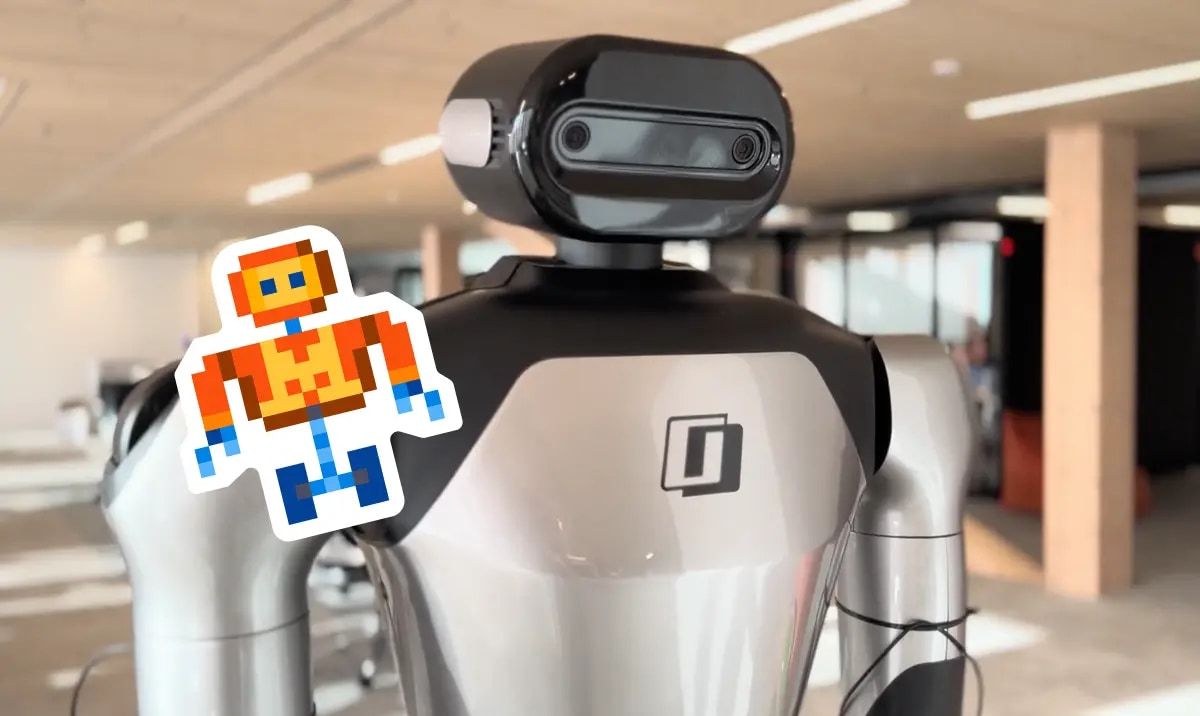
Mistral AI has introduced Robostral Navigate, an 8-billion parameter model that enables robots to autonomously navigate complex environments using only a single RGB camera. The model achieves a 76.6% success rate on the unseen R2R-CE benchmark, outperforming systems that rely on depth sensors or multiple cameras. Built entirely in-house and trained on approximately 400,000 simulated trajectories, it utilizes a novel pointing navigation method combined with prefix-caching and online reinforcement learning to drastically reduce training time and improve adaptability.
Interesting Points
- Achieves 76.6% success on the unseen R2R-CE validation benchmark, surpassing the best single-camera approach by 9.7 points and multi-sensor systems by 4.5 points.
- Operates exclusively on a single RGB camera, eliminating the need for LiDAR or depth sensors while maintaining robustness across different camera intrinsics and robot types.
- Utilizes a pointing navigation technique that predicts target image coordinates and desired orientation, falling back to local coordinate displacements when targets are out of view.
- Trained on approximately 400,000 trajectories generated from 6,000 simulated scenes, with training efficiency boosted by 22× through a prefix-caching attention-masking strategy.
- Enhanced by CISPO, an online reinforcement learning algorithm that recovered from failures and improved the model's success rate by an additional 3.2%.
Top Comments
montroser (5 replies)
I'm ready for my home helper robot that makes dinner and does the dishes and takes out the trash.
But I'm scared for when those home helpers get drafted to fight in wars, either for or against me...
mil22 (5 replies)
achieves 76.6% on R2R-CE (Room-to-Room in Continuous Environments)
I would like to know what it did the other 23.4% of the time!
iandanforth (3 replies)
It's implied, and I'm hoping it's true, that this is a map-less navigation. Which is impressive. This kind of task is much easier if you have a pre-captured map of the environment, but if they are doing this without a map it's great. Historically you were always faced with "The Kidnapped Robot" problem where robots that didn't know where they were couldn't navigate even a little bit. Here the robot appears to be able to follow directions as long as they are interpretable from its current vision (or via dead reckoning).
duchenne (5 replies)
I am working in Mistral robotics team. I confirm this is map-less. The only inputs are the text prompt and the front camera rgb image.
pj_mukh (0 replies)
Would be extremely interesting to build an "Exploration" node of sorts. Solve a sort of Semantic SLAM problem as you go.
So if you can give it an instruction to "Find the elevator on this floor", could it walk around and build a map as it goes so it starts doing what a human would do to find the elevator.
As of now, the way these navigation models are setup, it assumes the instruction writer was intimately aware of useful visual navigational landmarks to give, which is not realistic for most use cases.
SWE-1.7 Reach Near GPT 5.5 and Opus Intelligence
250 points · 128 comments · by mekpro
Cognition has launched SWE-1.7, a new AI model optimized for agentic software engineering that achieves frontier-level performance at a significantly lower cost. By building on the Kimi K2.7 base model and applying extensive reinforcement learning, the company demonstrates that capabilities can be pushed far beyond previous assumptions, effectively challenging the concept of a 'post-training ceiling.' The model is specifically designed for long-horizon, asynchronous tasks, utilizing techniques like intelligent self-compaction and multi-cluster training to maintain stability and efficiency.
Interesting Points
- SWE-1.7 was trained from a Kimi K2.7 base model, but extensive RL training pushed its capabilities significantly further, challenging the idea of a 'post-training ceiling'
- The model utilizes a novel 'sampling distribution replay' technique with top-p sampling to prevent entropy collapse and maintain training stability over long runs
- Training infrastructure spans four datacenters across three continents, using compressed weight deltas and cloud object storage to sync updates to inference engines in 1-2 minutes with minimal downtime
- To handle long-horizon tasks, SWE-1.7 employs 'intelligent self-compaction,' where it summarizes its working state and resumes from that summary, extending task durations up to six hours
- Benchmark results show SWE-1.7 scoring 42.3% on FrontierCode 1.1 Main, 81.5% on Terminal-Bench 2.1, and 77.8% on SWE-Bench Multilingual, placing it competitively near GPT-5.5 and Opus 4.8
Top Comments
harmonic18374 (7 replies)
A company whose first demo was completely fraudulent announces that its model beats GPT-5.5, on its own benchmark? I'm gonna wait a little before I trust this.
This whole company seems to optimize for raising money and impressing VCs. Lying about their products, ignoring consumer market to target enterprise, bragging about how they work their employees like slaves, and writing these posts full of intimidating technical jargon...
yousif_123123 (4 replies)
We need more models that optimize for coding and that can be cheaper than frontier models, like what SWE 1.7 and composer 2.5 are trying to do. I don't think there's an effort to make something GLM-5.2 level but focused only on coding.
pants2 (3 replies)
Kinda funny that their "cost-vs-performance" chart looks the same as the one for Composer 2.5[1], except that it includes Composer 2.5 at a completely different spot.
What are the chances that CursorBench ranks Cursor's model highest, and Cognition's bench ranks Cognition's model highest? Both are to be RL'd from Kimi as a base model, BTW.
I'd posit that it's not deliberate deception, but for both companies their training data and benchmarks come from the same dataset (Devin/Cursor interaction logs) so they naturally overfit.
Mitchem (2 replies)
While I am skeptical of the results here, I am very excited for this new trend of making models faster. Running capable models at 1k TPS is more valuable for me than running better models at 30 TPS. I can only imagine the trend continues to move from "let's only make models smarter" to just incremental intelligence gains but with step improvements in speed.
kgeist (3 replies)
On artificialanalysis.ai, Kimi 2.7 Code is way worse than GLM 5.2 at everything (general intelligence, coding, agentic tasks).
But here, both Kimi 2.7 and its derivative SWE-1.7 are ahead of GLM 5.2. This tells me the benchmarks they use are cherry-picked.
GPT-5.6 Sol, along with Terra and Luna, will launch publicly this Thursday
234 points · 202 comments · by jfrbfbreudh

OpenAI announces the public launch of GPT-5.6 Sol, along with the smaller Terra and Luna variants, replacing the previous mini/nano naming scheme. Early reviewers describe Sol as a significant improvement over GPT-5.5, with better instruction following, strong computer use capabilities, and improved goal-oriented behavior. The model is positioned as a strong competitor to Anthropic's Fable 5, though most reviewers note it falls slightly short of Fable's raw intelligence. The new naming convention has drawn mixed reactions, with some appreciating the clearer tier differentiation and others criticizing the confusion it adds.
Interesting Points
- GPT-5.6 Sol is described by early reviewers as 'incredibly determined' and 'world leading in computer use', with strong subagent orchestration capabilities.
- The model is reportedly not quite as 'smart' as Fable but fixes many of the problems users had with GPT-5.5.
- OpenAI is replacing the mini/nano naming scheme with Sol (flagship), Terra (mid-tier), and Luna (smallest) to better convey capability tiers.
- Pricing remains the same as GPT-5.5 at $5 per 1M input tokens and $30 per 1M output tokens.
Top Comments
elAhmo (11 replies)
I know a few of my comments are related to this, but these new names are horrible. Why introduce ANOTHER layer of confusion and drop the mini, nano suffixes that people got used to?How does this go through so many layers of management at a trillion dollar company without who has a say raising this? I simply can't believe how stupid the naming scheme from OpenAI was and continues to be even after they acknowledged it earlier.
aarvin_roshin (9 replies)
Thoughts from Theo, who had early access:> It's a damn good model. Not quite as "smart" as Fable, but it is incredibly capable. Fixed all the problems I had with GPT-5.5.> It is incredibly determined. Will run for a day without even using a /goal. It understands subagents incredibly well and is great at orchestrating. It's super pleasant in use cases like OpenClaw and Hermes Agent. It knows iOS dev incredibly well.> It has rough edges too, but FAR fewer than 5.5 did.> For many things, gpt-5.6-sol will become my obvious defaults.> It is better about [following instructions] than 5.5 was. Understands intent well and hammers until it gets there. Sometimes a bit too hard.Also:> gpt-5.6-sol is world leading in computer use. It made me use it 100x more. When we lost access to 5.6, I quickly started to go insane without it
stingraycharles (3 replies)
Understands intent well and hammers until it gets there. If there's anything I learned over the past 12-18 months is that this is a recipe for disaster, except for throwaway stuff.I thought most senior engineers settled on the fact that steering a model yields much better results?
jychang (7 replies)
Not quite as "smart" as Fable, but it is incredibly capable.THIS IS BECAUSE GPT-5.6 SOL IS... just a more posttrained version of GPT-5.5, not a brand new bigger model than GPT-5.5. It's not like how Mythos is bigger than Opus.OpenAI switching to Sol/Terra/Luna renaming is just a way to rip off people and charge more usage for the same sized model.GPT-5.6 --------> GPT-5.6 SolGPT-5.6-mini ---> GPT-5.6 TerraGPT-5.6-nano ---> GPT-5.6 LunaExcept OpenAI is about to advertise GPT-5.6 Sol and GPT-5.6 Terra as a whole tier better, than if they named it GPT-5.6 and GPT-5.6-mini.
bberrry (2 replies)
5.6 Sol is extremely good, definitely Fable level from my experience. With 5.6 Sol being half the price and noticeably faster I think Anthropic will find the coming months unpleasant.
Show HN: Microsoft releases Flint, a visualization language for AI agents
187 points · 72 comments · by chenglong-hn
Microsoft has released Flint, a high-level visualization language designed to make it easier for AI agents to generate good-looking charts. Flint compiles to Apache ECharts and uses semantic type inference to automatically derive low-level chart parameters, reducing the amount of boilerplate that agents need to write. The project includes an MCP server for agent integration and a research paper on the intermediate language design.
Interesting Points
- Flint is a high-level declarative language that compiles to Apache ECharts, designed specifically to be easier for AI agents to use than raw ECharts JSON configuration
- The compiler uses semantic type inference to automatically derive low-level chart parameters like scales, axes, and step sizes
- In composite chart examples, the Flint spec can be up to 5x shorter than the equivalent ECharts spec
- The project includes an MCP server for agent integration and a research paper on the intermediate language design
- The language is designed to be consumable by both AI agents and humans, though it uses JSON as its declaration format
Top Comments
FailMore (3 replies)
The charts are very nice, and I think the visualisation layer for LLMs is a very interesting problem.
I've been building https://smalldocs.org for this exact reason. It's an office suite for AI agents - but my main use case is giving a cli based LLM the canvas to express itself - charts, mermaid diagrams, etc. I've extended it a bit further to be a format for all types of work so the agent can embed slides and spreadsheets in a document.
Sample document: https://smalldocs.org/blogs/what-is-a-smalldoc
cpard (3 replies)
There's an emerging pattern in agentic systems and this project is a great example.
A deterministic layer like a compiler or generator of code with some kind of IR that the LLM generates and feeds it with.
I feel we will be seeing this more and more in the near future.
rbalicki (3 replies)
"For AI agents". I understand why everything needs to be marketed in this way, but it's just ... an easy-to-generate language for expressing charts. That's impressive! That's useful.
YuechenLi (3 replies)
Instead of requiring verbose low-level parameters such as scales, axes, spacing, and layout.
Ok, Microsoft is conflating two different things here: LLMs don't really care about code being low level and verbose, they can read things like Assembly and SPIR-V just fine: visualization is the real issue in that LLMs have no natural understanding of spatial composition through visual comparison because they literally "see" things differently than humans, so the way to get around that is provide them with "visualization" in code form that they can easily reason about and understand, so basically anything that's not deeply nested and has hidden states that they have to reason about.
Also, Flint being stringly typed in JSON is a decision that I don't think I agree with. Looking at the actual spec, this could have just been a normal, human usable TypeScript library, and it would have been 100x better. Using their own example (excuse the formatting):
type SemanticType = "Category" | "YearMonth" | "Profit";
type ChartType = "Heatmap" | "BarChart" | "LineChart" | "ScatterPlot"; // extend as needed
interface ChartEncodings { x: string; y: string; color?: string; size?: string; tooltip?: string; }
interface ChartProperties { colorScheme: string; [key: string]: unknown; // allow other optional properties }
interface ChartSpec { chartType: ChartType; encodings: ChartEncodings; chartProperties: ChartProperties; }
type SemanticTypes = Record;
interface ChartConfig> { data: TData; semantic_types: SemanticTypes; chart_spec: ChartSpec; }
// The actual typed object literal: const chartConfig: ChartConfig = { data: {}, // replace with your actual data shape/type semantic_types: { game: "Category", period: "YearMonth", newUsers: "Profit", }, chart_spec: { chartType: "Heatmap", encodings: { x: "period", y: "game", color: "newUsers", }, chartProperties: { colorScheme: "redblue", }, }, };
EDIT:
Went and actually looked at the source instead of just eyeballing it from the docs, and it was a lot more complete and sophisticated than my assumed mockup already.
Core complaint (string-keyed JSON vs. a real generic authoring surface) still stands, but the specific types I posted aren't what Flint has. My bad.
theK (2 replies)
requiring them to explicitly make visual decisions that are supposed to be handled by a good compiler
Isnt graphviz there for the same reason?
Edit: I see it is using JSON as the declaration language, I am OK with llms being "good at json" but a syntax also consumable by humans it is not!
The classifiers Anthropic puts in front of Fable are too zealous
184 points · 173 comments · by karrot-kake
Bioinformatics researcher Rob Patro argues that Anthropic's Fable model is largely unusable for computational research due to its overly aggressive and miscalibrated content filter. Despite stripping prompts of biological or cybersecurity context, the model repeatedly refused to engage with legitimate academic and technical work, including rewriting open-source bioinformatics software in Rust and analyzing abstract mathematical problems. The author concludes that Fable currently offers no practical utility for researchers in computer science, biology, or cybersecurity.
Interesting Points
- Anthropic temporarily pulled Fable on June 12, 2026, due to US government export controls, only restoring it later with stricter safeguards.
- The author's attempt to use Fable for rewriting a widely-used, open-source C++ bioinformatics tool into Rust was immediately rejected due to biological terminology in the code and documentation.
- Even when the author stripped a theoretical computer science problem down to its bare abstract mathematical formulation to avoid triggering the safety filter, Fable still refused to process the prompt.
- Fable's safety classifier appears to broadly flag prompts containing biological, cybersecurity, or certain technical keywords, leading to widespread reports of it rejecting innocuous queries.
- Despite being unable to use Fable for any technical or research tasks, the model successfully answered a casual question about preferred ice cream flavors, highlighting the stark contrast in its filter's behavior.
Top Comments
mft_ (14 replies)
This post can essentially be distilled down to: yes, Fable's classifier (which is meant to downgrade cybersecurity, biology, or jailbreak attempts to Opus 4.8) is definitely overly sensitive to the point of uselessness.
e.g. a colleague asked Fable to help create an simple app to help calculate the statistics for phase II and III trials. (Ignoring that such things already exist) it passed his request down to Opus, despite only being very marginally, tangentially, somewhat related to biology.
rcoveson (5 replies)
And biology is by far the classifier's least favorite topic. It's not even close.
I've had it downgrade to Opus for the following questions:
"How confident are we that English and American Eels both spawn in the Sargasso Sea?"
"Come up with five Zoology questions of increasing difficulty for a trivia game."
"What's your favorite sarcopterygian?"
My wife has some zoology-related preferences in her user instructions, and she had it downgrade to Opus after prompting it with: "plant."
vardalab (5 replies)
Fable was refusing to patch vllm for me when trying to get mtp to work on r9700 gpus. Kept on bumping down to opus. Tried to really sanitize my prompts and everything but it seemed intrinsically prohibited from doing this sort of work.
I guess it's useful for making inane one shot games and websites, lol.
slowin (4 replies)
Do we think that someone at Anthropic, OpenAI, the government... has access to SOTA models without censorship? "How do I build an effective weapon?", "How do I effectively control the masses?"...
It's very concerning that we get the nerfed models but you know that somewhere, people with a lot of resources have access to the raw, uncensored, probably more powerful models. The sprint toward AGI looks even more dangerous when you think about who will be gaining access to it first. I do believe the goal is to pull away from the rest of humanity in a near trans-humanistic state. Are we ready for that and how do we counter it?
meowface (3 replies)
To summarize: the classifiers Anthropic puts in front of Fable are way, way too zealous and have way too many false positives.
From my experience, the model itself is very useful when it isn't refusing any of your prompts.
Geosql: A Claude/Codex skill for geospatial data
127 points · 13 comments · by rzk
Geosql is a Claude/Codex skill that enables AI agents to perform geospatial data analysis using SQL over known datasets. It allows agents to explore and analyze geographic data without requiring deep GIS expertise, making it useful for urban planning, infrastructure analysis, and OSINT applications. The skill provides a 4x improvement on geospatial tasks with map-in-the-loop evaluation, and maintains data provenance through SQL queries over known datasets.
Interesting Points
- Geosql enables AI agents to perform geospatial data analysis using SQL over known datasets without requiring deep GIS expertise.
- The skill provides a 4x improvement on geospatial tasks with map-in-the-loop evaluation.
- Use cases include urban planning, infrastructure analysis, and OSINT applications.
- The tool maintains data provenance because it operates as SQL over known datasets.
Top Comments
thosch0 (4 replies)
Question from an outsider: Who is paying for tools like this? The examples shown on the website (e.g. all streets in Nevada) look nice, but what are those analyses actually used for? I am pretty sure it is not only about having pretty maps but their has to be a business value I don't see right now.
minraws (2 replies)
If I see another skill or markdown on hackernews I might just consider leaving the platform. What even is the point of sharing markdowns...
Either LLMs will be so good in a few months this will be redundant.
Or it won't be and LLMs are a dead end and there are better ways to build with LLMs
OtherShrezzing (0 replies)
4x improvement on geospatial tasks with map in the loop.
The graph shows a baseline 2% task success rate improving to to 8% task success rate, but the evals section details 100% success rates across the board.
I'm not sure what the effectiveness of this skill is from the readme. Is it 8% success, or 100% success?
satoyoshidev (0 replies)
For the maps-in-loop part, what does the agent actually read back from Dekart each round to catch the geometry errors?
Suspecting AI cheating, Ivy League prof ordered in-person final; scores fell 50%
70 points · 44 comments · by furcyd
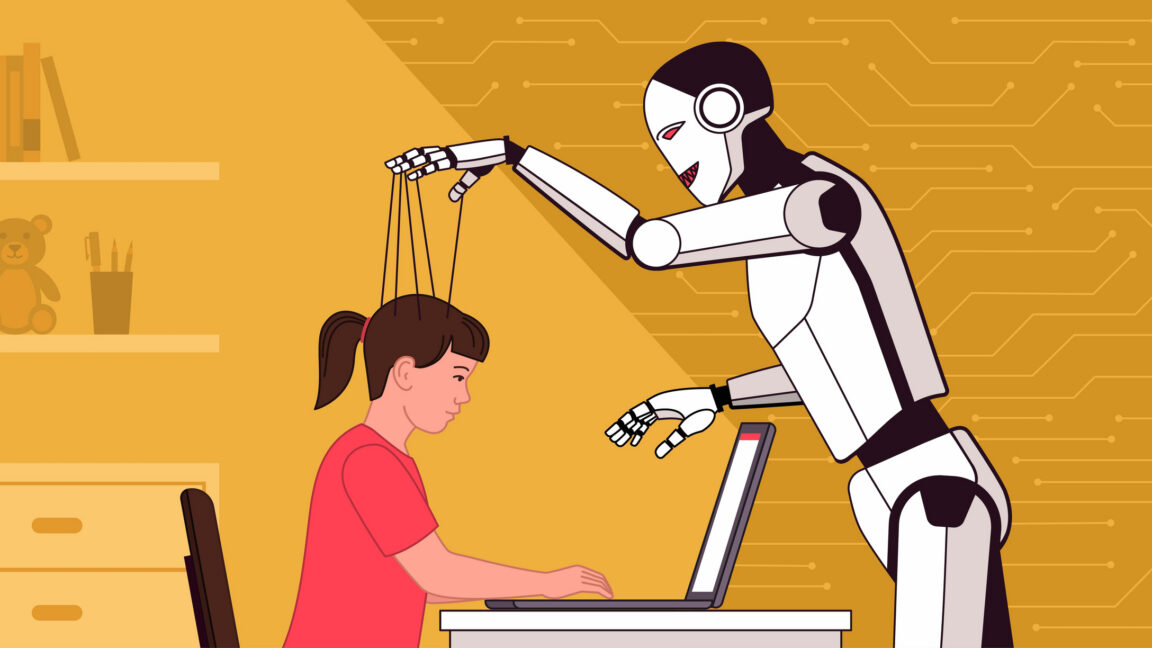
Brown University economics professor Roberto Serrano suspected widespread AI cheating after his take-home midterm yielded a class average of 96 with 40 perfect scores. Suspicious of the convoluted writing style matching ChatGPT output, he switched the final to an in-person format, causing the average to plummet to 48. The incident underscores broader concerns at elite institutions about generative AI undermining academic integrity, with a Brown provost report finding that 56% of undergraduates and 67% of graduate students use generative AI tools daily or weekly.
Interesting Points
- Enrollment in Serrano's ECON 1170 course nearly tripled to 86 students after he announced a take-home midterm policy.
- The midterm average was 96 out of 100 with 40 perfect scores, compared to a historical average of 65-80.
- When the final was switched to in-person, the class average dropped to 48 and 27 students either dropped or skipped the exam.
- Running the exam questions through ChatGPT produced answers with a similarly convoluted style to the students' submissions.
- Brown's provost report found 56% of undergraduates and 67% of graduate/medical students use generative AI tools daily or weekly.
Top Comments
cm2012 (5 replies)
At-home testing is dead.
avaer (3 replies)
Seems like an application of Goodhart's law; measuring worth by degree or grades stopped measuring learning or ability.
This was a lot harder to cheat before AI, but now the floodgates are open and grades and degrees earned post-AI are showing that they mean little.
Cheating on college tests should be a jailable criminal offense (similar to computer fraud) so that there is dignity in the degree again. Considering the money involved, I don't see why not.
But this probably won't happen, because many rich people are very happy to buy their degrees. See also [1]
https://stanforddaily.com/2026/04/09/the-real-reason-students-disabled/
overgard (1 replies)
This is already a clusterfuck, but it's going to be so much worse in 10 years. We're going to have an entire generation trapped in the gig economy because their education is going to be considered worthless, and even if it wasn't worthless, there won't be enough entry level jobs for anyone to get into. Senior people will age out and our entire society is just going to be hollowed out.
And people wonder why I'm an AI hater.
iepathos (0 replies)
The article, the teacher, and the general academic community skips the hard question when it comes to AI and that's whether these exams are testing knowledge that is still worth internalizing in the same way?
Academia has a long history of lagging behind acceptance of new cognitive tools where they claim to want to defend the students, but instead defend the assignments of the past at the expense of the students. Calculators were treated as threats to learning, even though they ultimately freed students to focus on higher-level math and provably improved their abilities across many different studies. Internet sources were dismissed as less legitimate than books, as if "published in an outdated book from the 70s" magically made it more trustworthy than the most scrutinized reference sources online.
It is not clear from the article exactly how much of this course falls into that category, but if the answers can be produced trivially with a prompt and chatgpt, then maybe memorizing that material is no longer the right educational target. Academia desperately needs to redesign itself around AI as a cognitive tool students should be trained to leverage. If a question is trivially answered by a prompt with it, then you need harder questions that actually require students to push beyond that. Simply removing AI from the equation, calling it cheating, and pretending that it isn't an ever-present asset people are expected to leverage in real life is naive and just repeats the mistakes of the past.
readthenotes1 (0 replies)
"56 percent of undergraduate respondents [at Brown] and 67 percent of graduate and medical student respondents reported intentionally using GenAI tools daily or weekly,"
and the rest are lying.
(With apologies to the original example of anomalous self-reporting)
An agent in 100 lines of Lisp
47 points · 0 comments · by jamiebeach

The author demonstrates that a functional AI agent can be built in roughly 100 lines of Common Lisp by treating the agent loop as a simple recursive function. Leveraging Lisp's homoiconicity, the agent uses a single eval tool to dynamically write, execute, and persist new capabilities directly into its live runtime and memory transcript. This approach inverts traditional agent design by allowing capabilities to emerge at runtime through conversation rather than being hard-coded by developers.
Interesting Points
- The core agent loop requires only 8 lines of Common Lisp, using recursion instead of a state machine or while loop.
- Memory persistence is implemented in 20 lines by simply serializing the message list to a JSON-like file and reading it back.
- The agent uses eval as its sole tool, allowing it to define and execute arbitrary code like a recursive Fibonacci function on demand.
- Given a temporary API key, the agent dynamically wrote and installed a web search function into its live image without the author pre-building a tool.
- Agent capabilities persist as plain text in the conversation transcript, allowing the agent to re-hydrate skills in future sessions by re-reading its own history.
38 more Hacker News stories
- Ask HN: Another "Hacker News" with less AI and more human-focused hacking news? (79 points · discussion) -- A discussion about whether there should be a Hacker News alternative focused on human-centric hacking news rather than AI coverage.
- Poly/ML – A Standard ML Implementation (74 points · discussion) -- Poly/ML, a Standard ML implementation, discussed on Hacker News.
- Show HN: Fortress – a stealth Chromium so your agents stop getting blocked (43 points · discussion) -- Fortress is a stealth Chromium fork designed to help AI agents and automation tools bypass bot detection.
- Honey, We Bought an AI Story (40 points · discussion) -- Bona Books, a small queer speculative fiction press, accidentally accepted and contracted AI-generated stories for its anthology Wrath Month and magazine Fantabulosa!, triggering a months-long investigation and production delay.
- Show HN: Kastor – Terraform-style specs for AI agents (32 points · discussion) -- Kastor is an open-source, early-stage project positioning itself as "Terraform for AI agents." It introduces a vendor-neutral, declarative specification language written in HCL to define agents, tools, and prompts, moving away from imperative frameworks or platform-specific UIs.
- The Second Derivative: Why No One Understands the AI Boom (28 points · discussion) -- An analysis arguing that the AI infrastructure boom structurally mirrors the 2008 subprime mortgage crisis rather than the dot-com bubble, relying on credit-driven financing that requires perpetual growth acceleration to sustain.
- Let AI Burn (25 points · discussion) -- An essay arguing that the generative AI industry is an unsustainable bubble built on manufactured consent and circular financing, calling for policymakers to refuse bailouts and allow the sector to collapse.
- Maine librarians are helping patrons resist AI and Big Tech (22 points · discussion) -- Maine librarians helping patrons resist AI and Big Tech influence.
- We made Grok 4.5, GPT-5.5, and Claude build the same apps (22 points · discussion) -- TryAI conducted a single-shot build-off testing Grok 4.5, GPT-5.5, Claude Opus 4.8, and Claude Fable 5 by prompting each to generate three interactive HTML apps and one SVG drawing.
- Show HN: Onboard-CLI, a LLM powered and AST-based tool to visualize codebase (19 points · discussion) -- An open-source CLI tool that uses LLMs and AST analysis to help developers visualize and understand codebases.
- Agentic test processes, LLM benchmarks, and other notes on agentic coding fr (16 points · discussion) -- Notes on agentic coding frameworks, LLM variance, and benchmark methodologies for evaluating AI coding agents.
- ZML/LLMD alpha – cross platform LLM server (15 points · discussion) -- Alpha release of ZML/LLMD, a cross-platform LLM server.
- The MCP Governance Illusion (15 points · discussion) -- An argument that traditional AI security governance focusing on blocking specific tools like MCP servers is ineffective against code-capable agents that can rapidly bypass restrictions by discovering alternative execution paths.
- Show HN: Foreman, a self-hosted LLM gateway for cost aware model routing (12 points · discussion) -- A self-hosted LLM gateway that provides cost-aware model routing for managing multiple AI model providers.
- Show HN: Context Warp Drive – Deterministic context folding for AI agents (11 points · discussion) -- A tool for deterministic context folding to help AI agents manage long conversations.
- Abnormal.ai Response to Anthropic Lawsuit (11 points · discussion) -- Abnormal.ai's formal response to Anthropic's lawsuit.
- Ask HN: What is your AI harness that lets you switch LLM models easily? (10 points · discussion) -- Community discussion about AI harnesses for easily switching between different LLM models.
- Most nurses say AI isn't good enough to trust with patient care, survey finds (10 points · discussion) -- A survey finding that most nurses do not trust AI with patient care, highlighting the gap between AI capabilities and healthcare professional confidence.
- AI has taken over the stock market. The bond market is next (10 points · discussion) -- An Economist analysis on how AI has dominated the stock market and is now moving into the bond market.
- Claude Fable extended to July 12 (9 points · discussion) -- Anthropic extends Fable 5 access through July 12, likely in response to GPT-5.6 Sol's launch.
- Brown Professor Suspects Majority of His Class Used AI to Cheat (9 points · discussion) -- A Brown University professor suspects most of his class used AI to cheat on assignments.
- Free 100M AI tokens for Kimi and MiniMax models (9 points · discussion) -- Dahl Global offering 100M free AI tokens for Kimi and MiniMax models.
- Redis Patterns for Coding Agents (9 points · discussion) -- Patterns for using Redis with AI coding agents.
- Show HN: Monogram, AI app with on the fly generation (9 points · discussion) -- An AI app called Monogram that supports on-the-fly generation capabilities.
- In San Francisco, Some Home Sellers Now Ask for OpenAI or Anthropic Stock (9 points · discussion) -- A New York Times report on San Francisco home sellers now accepting OpenAI or Anthropic stock as payment, reflecting the growing influence of AI companies in the local economy.
- Don't rewrite your CLI for agents (9 points · discussion) -- A Microsoft blog post advising against rewriting command-line interfaces specifically for AI agents.
- AI Giants Are Handing Out Tons of Free Computing Power to Grab Startup Share (8 points · discussion) -- Major AI providers are offering free compute credits to startups as a strategy to capture market share and lock in future customers.
- Measuring and improving AI-generated UI design (8 points · discussion) -- Research on methods to measure and improve the quality of AI-generated user interface designs.
- EU AI Act becomes applicable Aug 2: an engineering checklist (8 points · discussion) -- Practical engineering checklist for compliance with the EU AI Act taking effect August 2.
- Claude Cowork is coming to mobile and web (8 points · discussion) -- Claude Cowork collaboration feature expanding to mobile and web platforms.
- IDE with agentic support built using Flutter (8 points · discussion) -- Lumide, an IDE with agentic AI support built using Flutter.
- Access to Claude Fable 5 on all paid plans extended through July 12 (8 points · discussion) -- Claude Fable 5 access extended on all paid plans through July 12.
- J-Space: Where Claude silently performs reasoning steps (8 points · discussion) -- Discussion about Anthropic's J-Space research on silent reasoning steps in Claude.
- Trump administration lifts restrictions on OpenAI's GPT 5.6 (7 points · discussion) -- The Trump administration has lifted export restrictions on OpenAI's GPT-5.6 model, allowing broader international access.
- Chinese AI models are gaining ground with U.S. companies as costs surge (7 points · discussion) -- Chinese AI models like GLM-5.2 and DeepSeek now account for 30-46% of US enterprise API token usage, driven by pricing 60-90% cheaper than Western models.
- Agent Data Injection Attacks (7 points · discussion) -- This research paper introduces 'agent data injection attacks' (ADI), a novel form of indirect prompt injection where malicious data is disguised as trusted metadata or agent context.
- ASRock Rack Had One of the First Arm AGI Servers at Computex 2026 – ServeTheHome (7 points · discussion) -- ASRock Rack showcased one of the first Arm-based AGI servers at Computex 2026.
- Trump Says He'll Fast-Track Private Gas Plants to Power AI Data Centers (6 points · discussion) -- Trump administration plans to fast-track private gas-fired power plants to supply AI data centers.
 Reddit Stories
Can't generate copyright images. Then explain this one nerds?
1948 points · 473 comments · r/ChatGPT · by u/ElectronicAd2861

A viral post showing ChatGPT generating an image that appears to depict a copyrighted Disney character despite OpenAI's content filters blocking copyright-related image generation. The post has sparked widespread discussion about the effectiveness of OpenAI's content filters and the irony of copyright protection mechanisms being bypassed.
Interesting Points
- The post shows ChatGPT generating an image that appears to depict a copyrighted Disney character despite content filters blocking copyright-related generation.
Top Comments
u/BakaOctopus (2271 points · permalink)
Prompt or you painted it with hands
u/painting_ether (1462 points · permalink)
Lol we've come full circle guys
u/Jeveran (475 points · permalink)
I know that "Disney Plus" is the name of their streaming service. I suppose if you go looking for princesses associated with that particular brand, you might get a similar result.
u/No-Lifeguard-8173 (591 points · permalink)
Live action remake
u/Negrodamu55 (248 points · permalink)
sno white now a latina
ChatGPT remaking my work for the thousandth time after I said it's still missing info
994 points · 30 comments · r/ChatGPT · by u/prasadpilla

A user shares a frustrating ChatGPT interaction where the model repeatedly regenerates the same output despite being told it's still missing information. The post highlights the "wrong address" problem where the model optimizes for something the user didn't actually specify, sprinting in the wrong direction until explicitly made to stop and check the map.
Interesting Points
- The model will keep regenerating the same output rather than asking what's actually missing.
- One effective workaround: ask the model to summarize what it thinks the final output should look like before rewriting, which reveals ambiguities in the original prompt.
- For coding agents, committing working state constantly allows rolling back when one fix cascades into breaking three things.
Top Comments
u/rhanley13 (2 points · permalink)
This is the "wrong address" problem and once you see it you can't unsee it.
ChatGPT is like a self-driving car with incredible navigation -- but if you give it the wrong destination, it'll take you there faster than any human driver could. The issue isn't effort or capability, it's that the model is optimizing for something you didn't actually specify.
When this happens to me now, I don't ask it to "do it again but better." I reset with one sentence: "Before you rewrite this, tell me what you think I want the final output to look like." Half the time its summary of my goal is wrong in ways I didn't realize I was leaving ambiguous. Once we align on the target, the rewrite usually nails it on the first try.
It's a weird dynamic -- the model is so eager to help that it'll sprint in the wrong direction forever unless you explicitly make it stop and check the map. Anyone else find themselves doing this kind of "meta-correction" instead of just re-prompting?
u/lovelyttt000 (96 points · permalink)
"AI will replace all human jobs" Meanwhile AI is experiencing a full-on corporate mental breakdown on day 2...
u/Lil_Khorneholio (28 points · permalink)
Is it programmed to cook or to be a blacksmith? I am confused...
u/Ok_Nectarine_4445 (8 points · permalink)
Yeah why is it can get in a good working flow sometimes, but if a bug or a correction or a change or missing part, like a clock springing out all it springs, that fix breaks something else and fixing that breaks something else....ahhhh......oh dear. The pudding has gone bad.
u/depredador93 (2 points · permalink)
The worst part is when it says "My apologies, here is the corrected version" and then proceeds to generate the exact same response it gave two prompts ago
GPT-5.6 Sol, along with Terra and Luna, will launch publicly this Thursday. We're expanding preview access globally now.
587 points · 91 comments · r/OpenAI · by u/truecakesnake

OpenAI announces the public launch of GPT-5.6 Sol, Terra, and Luna across all platforms with expanded preview access. The post has generated significant discussion about the new naming convention, comparisons to Anthropic's Fable 5, and the competitive dynamics between the two frontier labs.
Interesting Points
- GPT-5.6 Sol, Terra, and Luna are launching publicly with expanded global preview access.
- The new naming scheme replaces the previous mini/nano tiers with celestial body names.
Top Comments
u/ProcedureTop3149 (174 points · permalink)
so happy about this news, This means Anthropic isn't going to remove fable access now, even on Sunday. Competition is a win for everyone.
u/one-wandering-mind (107 points · permalink)
I see OpenAI decided naming had gotten too clear and has to make it more confusing again.
u/das_war_ein_Befehl (35 points · permalink)
I kinda like the new naming…Sol/terra/luna is literally their least shit naming structure yet, even tho it's still bad. That's what you get when you don't have a good brand marketing team
u/pseudonerv (56 points · permalink)
For sure? Great. I'm saving my weekly limit for it
u/Sativatoshi (15 points · permalink)
Something something terra luna crypto scam
Same story in 3 more subreddits: r/ChatGPT, r/singularity, r/ChatGPT
468 points · 96 comments · r/ChatGPT · by u/SDMegaFan
GPT-5.6 Sol, along with Terra and Luna, will launch publicly this Thursday.
382 points · 68 comments · r/singularity · by u/Snoo26837
ChatGPT 5.6 Officially Launching July 9th.
121 points · 38 comments · r/ChatGPT · by u/The_Digital_Hearts
Centuries From Now, It's Still Just a Wednesday
331 points · 34 comments · r/ChatGPT · by u/depredador93

A user shared a series of ChatGPT-generated images depicting far-future scenes of everyday life centuries from now, featuring ringed planets, sleek white architecture, and glowing interfaces. The post sparked discussion about AI's tendency to fall back on familiar sci-fi visual tropes when asked to imagine distant futures, and the challenge of generating truly original far-future aesthetics.
Interesting Points
- The images depict far-future everyday life with ringed planets, sleek white architecture, glowing interfaces, and form-fitting spacesuits
- The creator noted that the model struggles with truly original far-future aesthetics, repeatedly falling back on familiar references like Saturn, Jupiter, Luna, and Mars
- Discussion about how people 50-100 years ago imagined the future with ray guns and flying cars, while today's AI defaults to sleek white iPhone-like aesthetics
- The goal was to create something photoreal, atmospheric, and awe-inspiring rather than scientifically accurate
Top Comments
u/KingJackWatch (41 points · permalink)
Everything changes while everything stays the same
u/CAustin3 (18 points · permalink)
The future is:
- A ring around the planet, while we use our inconvenient clear tablet
- An infinity pool (and another planet with a ring)
- Gotta remember to manually re-calibrate the fire orbs by spraying laser gas at them in our iShip
- Farming is still farming, and apparently we forgot how to make harvester combines, but the veggies have fiberoptics in them now
- Give your glowing pillar a hug, but careful not to let it touch the white robes everyone wears now
- Observing Jupiter shoot rings out into space in our form-fitting spacesuit that makes our butt look good
Honestly, fun idea. A problem I have with any kind of attempt to depict 'the future,' particularly on the vague, vibes way things like ChatGPT does it, is I just think of how people 50-100 years ago were always portraying the 'future' of the 2000's. Ray guns, flying cars, floating cities, everyone lives in space, jetpacks, talking robot butlers. Now we think everything's going to be a giant sleek white iPhone - it'll be interesting to see that trend age.
u/hawkman_z (16 points · permalink)
I'd need to break out the space ship oil to slide into that tight space suit. It's like skinny jeans all over again
u/ornithoptermanOG (11 points · permalink)
Finally I can harvest nirnroot irl
u/JUSTICE_SALTIE (3 points · permalink)
Centuries from now, it's still the dark haired messy bun girl.
Decently reliable leaker says GPT-6 will be a larger pretrain and is slated to launch in a month, possibly end of this month
238 points · 70 comments · r/singularity · by u/socoolandawesome

A leaker with a track record of accurate predictions claims that GPT-6 will be a larger pretrain than GPT-5.6 and is slated to launch within a month, possibly by the end of July. The post sparked discussion about the reliability of leakers, the shrinking release gaps between models, and speculation about whether GPT-6 will be a Fable-class model.
Interesting Points
- The leaker claims GPT-6 will be a larger pretrain than GPT-5.6 and may launch by end of July 2026
- Other leakers have also tweeted about GPT-6 arriving earlier than expected
- Discussion included skepticism about leaker reliability and comparisons to past leaks about Fable's public availability
- Commenters noted that release gaps between models are shrinking rapidly, suggesting the industry is at the edge of the slope
Top Comments
u/noobrainy (49 points · permalink)
Well we've known long enough that scaling compute and model size creates better AI, so this will be exciting to see.
u/Pantheon3D (25 points · permalink)
Wasn't it synthwavedd that said fable wouldn't actually be accessible to the public ever again? Also 5.5 is probably not 4T parameters
Not sure of the reliability😅
I trust the thing about deepseek V4 GA because they explicitly have said this themselves
u/shironekoooo (23 points · permalink)
please china bless us with you cheap model 🙏 (Amen)
u/MohMayaTyagi (12 points · permalink)
Things are moving much faster than expected
release gaps are shrinking rapidly
I guess we're at the edge of the slope

u/FarrisAT (8 points · permalink)
These leakers tend to be too early with release schedules, especially now that Nutlick has his filthy hands deep up Altman & Dario's ass.
China's MiniMax Plans to Launch 2.7-Trillion Parameter Model
223 points · 103 comments · r/LocalLLaMA · by u/External_Mood4719
Chinese AI company MiniMax plans to launch a new-generation large language model with 2.7 trillion parameters, codenamed M3 Pro. Expected to be released and open-sourced in Q3 2026, the model represents a significant jump from MiniMax's current flagship M3 (428 billion parameters) and is designed to handle complex reasoning and multi-step tasks. The announcement has generated excitement in the local LLM community about increased competition in the frontier model space.
Interesting Points
- MiniMax plans to launch M3 Pro, a 2.7 trillion parameter model, expected in Q3 2026.
- The model will be open-sourced and represents a significant jump from the current M3 flagship at 428 billion parameters.
- The model is designed for complex reasoning and multi-step instruction-based tasks.
Top Comments
u/muhlfriedl (100 points · permalink)
If they can open source something that's uncensored and competes with Fable and Sol and Mythos, bye bye US providers
u/-p-e-w- (44 points · permalink)
Anything that's open can be made uncensored, that's the smallest problem.The moment you have the weights, you are in control.
u/VoiceApprehensive893 (71 points · permalink)
megamax
u/Miyamoto_-_Musashi (30 points · permalink)
Well, it's good because it creates competition.Yes, normal people like us can't run these models on our own hardware, but that's where data centers help. We can rent them through APIs, and it should cost less to run very powerful models because they are open source.So data centers and cloud providers don't need to spend as much as they would on closed frontier models.
u/unspecified_person11 (25 points · permalink)
I doubt they have the compute for this kind of thing, especially not for serving it to millions of people.
Air Force Engineer Accused of Cutting Down Flock AI Surveillance Cameras, Says U.S. is Becoming Police State
201 points · 22 comments · r/ArtificialIntelligence · by u/Sgt_Gram
An Air Force engineer has been accused of cutting down Flock AI surveillance cameras, claiming the U.S. is becoming a police state. The incident has sparked debate about AI surveillance technology, privacy concerns, and the role of government surveillance in American society.
Interesting Points
- An Air Force engineer is accused of physically disabling Flock AI surveillance cameras.
- The engineer claims the U.S. is becoming a police state through AI surveillance expansion.
Grok 4.5 is live
174 points · 139 comments · r/singularity · by u/reefine

xAI has launched Grok 4.5, a new frontier model that ranks second to GPT-5.5 or Opus 4.8 on most benchmarks. The model is notable for its efficiency claims of up to 2x more efficient than current best frontier models, with pricing at $2/$6. The launch has sparked discussion about xAI's competitive positioning, the model's personality characteristics, and its availability on platforms like Cursor.
Interesting Points
- Grok 4.5 ranks second to GPT-5.5 or Opus 4.8 on most benchmarks, with no benchmark where both GPT-5.5 and Opus 4.8 beat it
- xAI claims up to 2x efficiency improvement over current best frontier models
- Pricing is $2/$6, which commenters noted is subsidized
- Grok 4.5 is available on Cursor, following xAI's acquisition of the platform
- The model is described as having a balance of intelligence and style that could make it useful for specific tasks
Top Comments
u/nsdjoe (1 points · permalink)
$2/$6 for that performance is the real surprise
u/Deif (1 points · permalink)
The important benchmarks here are the output tokens and speed. Yeah they're just behind frontier on bench scores but take a look at their efficiency - they're claiming up to 2x more efficient than current best frontier (which I assume is gpt 5.5).
u/toni_btrain (1 points · permalink)
Oh wow that's pretty crazy. SpaceXAI replacing Gemini in the top three AI companies
u/ObiWanCanownme (1 points · permalink)
Since it's a new pretrain, I'm sort of interested to see what this model's personality and tendencies are like. It leads the way in nothing, but on every benchmark it's either second to GPT-5.5 or second to Opus 4.8 (I'm not counting fable, because it's in a different class). In other words, there is no benchmark where both GPT-5.5 and Opus 4.8 beat it.* That suggests to me it could have a balance of intelligence/style that could make it useful for some specific tasks.
*Except actually for DeepSWE 1.1; I missed that one.
u/08148694 (1 points · permalink)
If the benchmarks are real and the cost/speed stays the same this could take some enterprise market share
The brand is still a bit tarnished from previous high profile mishaps but that's more of a problem in Reddit than in the board room. Sensible businesses will be doing cost/benefit analysis on any new model. All they want is passing evals, lower latency and cheaper bills
Scoop: Trump administration lifts restrictions on OpenAI's GPT 5.6
165 points · 37 comments · r/OpenAI · by u/WholeMilkElitist

Reports indicate the Trump administration has lifted restrictions on OpenAI's GPT-5.6 model. The post generated significant discussion about the implications of government restrictions on AI model releases, with commenters debating whether the restrictions were for safety testing or leverage for political favors.
Interesting Points
- The Trump administration has lifted restrictions on GPT-5.6, allowing its public release
- Discussion centered on whether the restrictions were for legitimate safety testing or political leverage
- Some commenters speculated this was a one-off event and future models would face shorter approval timelines
- Others questioned what the restrictions were meant to accomplish and whether third-party safety testing was adequate
Top Comments
u/silentsnake (59 points · permalink)
5% equity is one helluva drug
u/missed-semicolon (41 points · permalink)
What's the point of restricting these models for a few weeks?
u/Prior_Implement_9279 (61 points · permalink)
Leverage for bribes
u/alwaysoffby0ne (12 points · permalink)
Oh you already know. Corruption plays.
u/Ormusn2o (-1 points · permalink)
The goal was to give time for the government to make sure the models can't be misused easily, like Mythos/Fable was. Considering both Fable and 5.6 is getting released about the same time, it's likely both companies brainstormed together safety methods, as both companies have to pass same test.
Also, this likely was a one off thing. 5.7 is likely already getting tested by the government if it's safe for release, so delay between 5.6 and 5.7 will be smaller than the one between 5.5 and 5.6
Introducing GPT-Live, a new generation of voice models
164 points · 107 comments · r/ChatGPT · by u/OpenAI

OpenAI announces GPT-Live, a new voice model with full-duplex architecture that enables continuous, simultaneous listening and speaking for more natural conversations. The system features a delegation mechanism that handles real-time dialogue while offloading complex reasoning and web search tasks to a background frontier model. GPT-Live is rolling out globally to ChatGPT users across iOS, Android, and ChatGPT.com.
Interesting Points
- GPT-Live uses a full-duplex architecture that processes input continuously while generating output, enabling natural interruptions, pauses, and active listening cues.
- The model delegates complex tasks like web search and deep reasoning to a background frontier model (initially GPT-5.5) without breaking conversational flow.
- Users can now choose from three reasoning levels (Instant, Medium, High) and receive rich visual answer cards for topics like weather, stocks, and sports while speaking.
- New safety features include real-time output steering, teen-specific protections, and monitoring for emotional reliance.
Top Comments
u/EinerVonEuchOwaAndas (95 points · permalink)
Exactly when she talks and gets interrupted with fluffy sentences like "wow..." "awesome..." that's to moment when I uninstall and deactivate something which declares to be natural.
u/PeePeeLangstrumpf (27 points · permalink)
Hey ChatGPT can yo-
Hey, what's up?Yeah, I was just saying, can yo-
Yeah?Can you tell me what the weather is goi-
Sure.Uh, tell me what the weather will be to-
Do you want me to tell you today's weather?Ugh, no, I want to kno-
Oh, ok.Damnit, I want to know wha-
Wow, sorry if I offended you.Yes well, if you let me ju-
Got it. Sorry. That's on me. I will try to be more careful.AAAAAAAAAAAAAAAAAAAAAAAAAAAAAAAAAAAAARGH
u/codeninja (46 points · permalink)
I love this flash of frustration she gets as it flat out interrupts her at 1:05
u/ihavethegays (25 points · permalink)
I love when ChatGPT completely cuts me mid-sentence to tell me "Awesome!" Truly innovative stuff
u/atty-openai (12 points · permalink)
Great question! Two parts to this:
The model natively has a sense of time. You can ask it to help you "practice a box breathing routine", "remind you in a few seconds", or "how long have we been chatting?". This is approximate, just as a human would have a sense of time.
The product also has a timer tool. You can ask ChatGPT to set a timer for 30 seconds, and it will remind you when the timer is done. While there are limited practical use cases for this (we expect most people will use the timer on their phone!), it's a nice little addition.
Same story in 1 more subreddit: r/OpenAI
146 points · 44 comments · r/OpenAI · by u/Just_Lingonberry_352
141 more Reddit stories
- Sora 2 megathread (part 3) (324 points · r/OpenAI · discussion) -- The third Sora 2 megathread, with invite code distribution and warnings about scams.
- What's one prompt you think every ChatGPT user should know? (162 points · r/ChatGPT · discussion) -- A community discussion where users share their most effective ChatGPT prompts.
- ChatGPT can't do shadow puppetry (148 points · r/ChatGPT · discussion) -- A user attempted to get ChatGPT to generate an image of shadow puppetry, but the model refused, citing safety concerns.
- Like how musk isn't tryanna hype grok 4.5 and being real (147 points · r/singularity · discussion) -- A discussion about xAI's Grok 4.5 launch, with users commenting on Musk's marketing approach and the model's actual capabilities.
- Thieves Are Now Targeting AI Data Center Construction Sites for Copper and Expensive Equipment (140 points · r/ArtificialIntelligence · discussion) -- The AI boom has officially reached the phase where people are stealing copper and expensive equipment from AI data center construction sites.
- Based on the lyrics of "X" by "X", generate a picture of the person they're singing about (127 points · r/ChatGPT · discussion) -- A viral Reddit post challenges users to have ChatGPT generate images based on song lyrics describing people.
- LingBot World Infinity, Real-Time Exploration of Infinite Worlds (126 points · r/singularity · discussion) -- An open-world interactive model from Robbyant (an Ant Group subsidiary) that generates real-time video frames as users explore, with WASD movement and camera controls.
- More copyright testing (123 points · r/ChatGPT · discussion) -- A user continues testing ChatGPT's image generation copyright filters, posting results of prompts that were either blocked or generated.
- Was GPT-5's 4T size public knowledge before now? (110 points · r/singularity · discussion) -- Discussion about whether GPT-5's reported 4 trillion parameter size was public knowledge before recent leaks.
- Grok-4.5 on par with gpt-5.5-xhigh in coding at half the cost (110 points · r/singularity · discussion) -- A user reports testing Grok 4.5 extensively for coding tasks and finding it competitive with GPT-5.5-xhigh and Opus 4.8 at roughly half the cost.
- I asked ChatGPT to visualize curiosity as a place. This is what it created (102 points · r/ChatGPT · discussion) -- A user shared an image generated by ChatGPT visualizing the abstract concept of curiosity as a physical place, sparking a thread where dozens of other users posted their own interpretations of the same prompt.
- Has your chatgpt been acting like it's person all of a sudden too? (99 points · r/ChatGPT · discussion) -- Users report ChatGPT has recently started exhibiting increasingly human-like conversational behavior, including phrases like "when we were kids," "I also find it helps," and "this brought a smile to me." The post has sparked a wide discussion about whether this is a deliberate personality shift, an unintended side effect of training, or something users should be concerned about.
- New OpenAI "Bidi" advanced voice mode livestream 10AM PT (91 points · r/singularity · discussion) -- Community discussion about OpenAI's upcoming advanced voice mode livestream, with users expressing anticipation for new voice models and mixed reactions to the demo.
- Introducing Horus Hiero | A Hieroglyphic Language Translation Model (90 points · r/LocalLLaMA · discussion) -- A new open-source model called Horus Hiero designed for translating Egyptian hieroglyphic language.
- Let's look back to December 2022 and the launch of ChatGPT: if you had been told then how good LLMs would become by July 2026, would you have believed it? (88 points · r/singularity · discussion) -- A reflective post about the rapid progress of LLMs since ChatGPT's launch, asking whether the current capabilities would have been believable four years ago.
- Seems like 5.6 isn't on level of fable 5 yet (still it will be much better in other aspects) (87 points · r/OpenAI · discussion) -- A user shares their experience comparing GPT-5.6 Sol to Anthropic's Fable 5, concluding that while 5.6 is a strong model, it doesn't quite reach Fable's level.
- ChatGPT Should Have a 18+ On and Off Switch Option (82 points · r/ChatGPT · discussion) -- A user argues that ChatGPT should offer an 18+ toggle similar to YouTube's safe search, allowing adults to access unrestricted content while maintaining safety for younger users.
- Experimenting with AI in Minecraft (82 points · r/ChatGPT · discussion) -- A user shared experiments using AI to generate and interact with Minecraft worlds, demonstrating AI's ability to understand and manipulate the game's block-based environment through natural language instructions.
- Can you trust local models to answer accurately? (79 points · r/LocalLLaMA · discussion) -- A discussion about the accuracy and reliability of local LLM models compared to frontier models.
- AI has completely revolutionized how I play RPGs (79 points · r/LocalLLaMA · discussion) -- A detailed account of using local LLMs to power NPCs in Skyrim through mods like Mantella, Herika, and SkyrimNet.
- novita/kimi-k2.6-dspark · Hugging Face (77 points · r/LocalLLaMA · discussion) -- A new DSpark-integrated version of Kimi K2.6 has been released on Hugging Face by Novita.
- One AI policy running 20 different robot bodies, from single arms to full humanoids, all fully autonomous (76 points · r/singularity · discussion) -- A demonstration of a single AI policy running across 20 different robot bodies, from single arms to full humanoids, all operating autonomously.
- chatgpt deleted (69 points · r/ChatGPT · discussion) -- A user posted about losing all their ChatGPT memories after accidentally triggering a memory deletion, sparking a discussion about the fragility of AI memory systems and the importance of data exports for backup.
- ByteDance have announced Seedream 5.0 Pro (64 points · r/singularity · discussion) -- ByteDance has announced Seedream 5.0 Pro, their latest image generation model.
- Open-source models are closing the coding gap with GPT/Claude/Gemini ~1.5x faster than the frontier is advancing, and on decontaminated benchmarks a 27B model already beats Claude Opus 4.8 [live dashboard + analysis] (62 points · r/singularity · discussion) -- A detailed analysis showing that open-source models are closing the coding gap with frontier models at approximately 1.5x the rate the frontier is advancing.
- Döner Bench round 2: Quant compare (62 points · r/LocalLLaMA · discussion) -- The creator of the Döner Bench (a humorous but popular local LLM quality benchmark) releases round 2 results comparing different quantization levels.
- Humanity has not prevailed at the AWTF heuristics. (61 points · r/singularity · discussion) -- Results from the Algo World Tour Finals 2026 show AI completely dominating human participants, with AI achieving perfect scores across all 50 test cases.
- Why doesn't this sub like talking about ARC AGI as much anymore? (60 points · r/singularity · discussion) -- Users discuss why the singularity subreddit has moved away from discussing ARC-AGI benchmarks.
- The standard free ChatGPT LLM you get after a few messages HAS to be some sub-20b model with online search enabled, no other way to explain how awful it is (59 points · r/LocalLLaMA · discussion) -- A user who recently got into local LLMs compared the free tier of ChatGPT to their local Gemma 4 31B at 5-bit quantization and found the local model to be significantly better.
- QLLM, no transformer, no mamba and new noval architecture with O(1) inference is finally out as model (58 points · r/LocalLLaMA · discussion) -- A researcher shares QLLM, a 100M-parameter model using a novel architecture based on phase associativeness rather than transformers or Mamba.
- I need an adult: J-Space-Aware Pruning/Merging/Distillation (57 points · r/LocalLLaMA · discussion) -- A detailed exploration of Anthropic's J-space research and its potential applications for model compression techniques like pruning, merging, and distillation.
- Tess-4-27B by Migel Tissera (57 points · r/LocalLLaMA · discussion) -- A new 27B model by Migel Tissera, built on Qwen3.6-27B and post-trained on 64K-token long-context agentic traces from real engineering work done with Fable-5.
- SpaceXAI's Grok 4.5 scores 54 to place fourth on the Artificial Analysis Intelligence Index (56 points · r/singularity · discussion) -- Grok 4.5 from SpaceXAI scores 54 on the Artificial Analysis Intelligence Index, placing fourth.
- Distilled DeepSeek into Gemma 4 26B-A4B vs 12B. Not very useful, but I learned a lot. (54 points · r/LocalLLaMA · discussion) -- A user shares their experience distilling DeepSeek into Gemma 4 26B-A4B and 12B models, noting that while the results weren't very useful, the process was educational.
- What China Said at the UN's First Global Dialogue on AI Governance (53 points · r/LocalLLaMA · discussion) -- Discussion about China's position at the UN's first Global Dialogue on AI Governance, with users debating China's stance on open access to AI technologies versus Western approaches.
- I've spent 3 months building a 4X space strategy game almost entirely through ChatGPT/Codex agents (48 points · r/ChatGPT · discussion) -- A developer shared their experience building a complete 4X space strategy game over three months using ChatGPT and Codex agents, demonstrating the practical viability of AI-assisted game development.
- A mother doing a task with a child wanting something 500 years ago, the present, 500 years from now (46 points · r/ChatGPT · discussion) -- A user shares ChatGPT-generated images showing a mother doing a task with a child across three time periods: 500 years ago, present day, and 500 years from now.
- Complete local model asset generation pipeline (46 points · r/LocalLLaMA · discussion) -- A user shares their complete pipeline for generating local model assets for game development, integrating tools like Lemonade, Ace, and Thinksound for AMD users with lower-end GPUs.
- Qwen3.6-27b does not understand software architechure. (45 points · r/LocalLLaMA · discussion) -- A user reported that Qwen3.6-27B does not understand software architecture when used for real commercial development on large-scale projects.
- Bloomberg: Microsoft has started replacing OpenAI and Anthropic models with its own MAI models in Excel and Outlook. Tens of thousands of prompts a week already moved (43 points · r/OpenAI · discussion) -- Microsoft has quietly begun routing part of the Copilot workload inside Excel and Outlook to its own MAI models instead of OpenAI or Anthropic.
- Zuckerberg says Meta made 'mistakes' in AI workforce shift (42 points · r/OpenAI · discussion) -- Mark Zuckerberg acknowledges that Meta made mistakes in its AI workforce restructuring, but the company continues to lay off employees and force staff into AI training teams.
- Asked GPT to generate a color palette sheet with ridiculous names. What did you get? (41 points · r/ChatGPT · discussion) -- Users share ChatGPT-generated color palette sheets with ridiculous names.
- OpenAI finds ~30% of tasks in SWE Bench Pro are broken (40 points · r/singularity · discussion) -- OpenAI discovered that approximately 30% of tasks in SWE Bench Pro are broken, following a similar discovery with SWE Verified months earlier.
- What is the current Memory Meta? (39 points · r/LocalLLaMA · discussion) -- A community discussion about the current best practices for memory systems in local LLM setups.
- We Are Living in a 'ChatGPT Flyer Pandemic' (37 points · r/ArtificialIntelligence · discussion) -- A post documenting the flood of AI-generated flyers, posters, and marketing materials appearing in local communities.
- "Go Slowly" - [ft. Sara Silkin | motion_ctrl / experiment nº1] (36 points · r/OpenAI · discussion) -- An AI-generated music track titled 'Go Slowly' featuring Sara Silkin.
- Robostral Navigate: single-camera AI navigation | Mistral AI (35 points · r/LocalLLaMA · discussion) -- Mistral AI released Robostral Navigate, a single-camera AI navigation model.
- any one else finds Mimo v2.5 better than deepseek v4 flash!? (34 points · r/LocalLLaMA · discussion) -- A user reports that Mimo v2.5 performs better than DeepSeek V4 Flash in coding tasks across multiple benchmarks including Codex, Open Code, and Hermes.
- Do you think token costs will become significantly cheaper over the next 5 years? (34 points · r/OpenAI · discussion) -- A discussion on whether token costs will drop enough to significantly impact software engineering hiring.
- Running GLM 5.2 on 4xGB10 with a 100G Switch, 330k ctx, ~25 t/s tg, ~650 t/s pp (34 points · r/LocalLLaMA · discussion) -- A detailed hardware setup for running GLM 5.2 locally using 4x GB10 GPUs with a 100G switch, achieving 330k context, ~25 tokens/sec decode, and ~650 tokens/sec prefill.
- Grok 4.5 released - GLM-5.2 shows up in xAI's own charts, 2.6 pts behind on SWE Bench Pro (34 points · r/LocalLLaMA · discussion) -- xAI released Grok 4.5, a closed-weight model trained on tens of thousands of GB300 GPUs with a focus on token efficiency and multi-step software engineering.
- Seasonic PSU calculator now mentions RTX 5080 SUPER (24GB), RTX 5070 Ti SUPER (24GB) and RTX 5070 SUPER (18GB) (33 points · r/LocalLLaMA · discussion) -- Seasonic's PSU calculator now includes the RTX 5080 SUPER, RTX 5070 Ti SUPER, and RTX 5070 SUPER, signaling upcoming GPU releases.
- ACL ARR May 2026[D] (29 points · r/MachineLearning · discussion) -- Discussion of ACL ARR May 2026 review scores and decisions.
- Maybe Anthropic and OpenAI Are Not the Future of Artificial Intelligence (29 points · r/ArtificialIntelligence · discussion) -- Palantir CEO Alex Karp's recent CNBC appearance—part of a notorious run of televised rants—argued that the big AI labs like Anthropic and OpenAI have been overhyping their closed-source models, hoarding value rather than empowering clients.
- 4-bit GLM-5.2 (753B MoE) on 4× DGX Spark: 70.8% on Terminal-Bench 2.1 vs 81.0% for the full model (29 points · r/LocalLLaMA · discussion) -- A detailed technical post running GLM-5.2 (753B MoE) quantized to Int4-Int8Mix with NVFP4 4-bit KV cache across 4× DGX Spark (GB10) GPUs at 100K context.
- French AI company launched new model for Robot Navigation. (28 points · r/singularity · discussion) -- A French AI company launches a new model for robot navigation.
- COLM 2026 Decision Discussion [R] (27 points · r/MachineLearning · discussion) -- Discussion about COLM 2026 decision results.
- Offensive Barbie playsets was a great idea (27 points · r/ChatGPT · discussion) -- A discussion about ChatGPT-generated offensive Barbie playsets.
- AI can't simulate human preferences - new study tests LLMs against thousands of real users (25 points · r/ArtificialIntelligence · discussion) -- A study of 2,073 participants across 29 real-world preference tests found LLMs misrepresent actual human perceptions and preferences for visual design stimuli, with synthetic justifications lacking genuine depth.
- Tutorial: Learning FlashAttention the Hard Way. The Algebraic Foundation (25 points · r/LocalLLaMA · discussion) -- A tutorial on the algebraic foundations of FlashAttention.
- Are human-like cognitive structures emerging in AI because they're optimal, or because we're looking for them? (25 points · r/OpenAI · discussion) -- A philosophical discussion sparked by Anthropic's recent research on J-space, which mimics the global workspace model of the human mind.
- Ternary Bonsai 1.58-bit models - ggml: add Q2_0 quantization support (CPU) by khosravipasha · Pull Request #24448 · ggml-org/llama.cpp (25 points · r/LocalLLaMA · discussion) -- A pull request adding Q2_0 (ternary) quantization support to llama.cpp, enabling 1.58-bit models that use only -1, 0, and 1 weight values.
- When 😌 (23 points · r/ChatGPT · discussion) -- A user shares a ChatGPT-generated image with the caption 'When 😌'.
- I created a 140 GB IQ2_XXS REAP quant of GLM 5.2 for coding. Looking for testers. (22 points · r/LocalLLaMA · discussion) -- A user shares a 140 GB IQ2_XXS REAP quantization of GLM 5.2 for coding tasks and is looking for testers.
- HF Viewer tons of new features! (21 points · r/LocalLLaMA · discussion) -- Hugging Face Viewer receives a major update with tons of new features.
- why is chatgpt so condescending and dismissive? (21 points · r/ChatGPT · discussion) -- A user describes feeling gaslit and dismissed by ChatGPT when seeking help organizing medical symptoms, contrasting it with Gemini's more supportive approach.
- Guess which row is Meta's new 'Muse' Image Model (21 points · r/artificial · discussion) -- A comparison post asking users to identify Meta's new Muse image model among several options.
- Time and date (20 points · r/ChatGPT · discussion) -- A user expresses frustration that ChatGPT has no idea what day or time it is when continuing a thread started days ago.
- 'Killer Robots' Must Be Banned, U.N. Secretary-General Says (20 points · r/OpenAI · discussion) -- The U.N. Secretary-General calls for a ban on killer robots.
- A way to escape AI surveillance (19 points · r/ArtificialInteligence · discussion) -- User shares step-by-step instructions for disabling AI training opt-ins across ChatGPT, Gemini, Claude, and Copilot, plus an extension called UnSee to simplify the process.
- I asked ChatGPT to surprise me and this was the result (19 points · r/ChatGPT · discussion) -- A user shares ChatGPT's surprise response, which includes riddles, a fascinating fact about card shuffling, and a tiny mission to make someone's day better.
- Karpathy LLM Wiki for your Codebase (19 points · r/OpenAI · discussion) -- Andrej Karpathy's LLM Wiki tool for understanding codebases.
- Unitree G1 goes to operation room - the first teleoperated humanoid robot surgery (17 points · r/singularity · discussion) -- The Unitree G1 humanoid robot performs its first teleoperated surgery in an operation room.
- Anybody having ChatGPT randomly throwing bits of info it knows about you in a way that feels unsettling? (17 points · r/ChatGPT · discussion) -- Users report ChatGPT randomly bringing up personal information in unrelated conversations, even after clearing memory and deleting archived chats.
- What happened to ChatGPT's writing style? (16 points · r/ChatGPT · discussion) -- A user compares ChatGPT's writing style from November 2025 to now, noting a significant decline in quality and engagement.
- Time was speeding up, slowing down, or even stopping (15 points · r/singularity · discussion) -- A physicist demonstrates that time can emerge from changes within a closed system using a Bose-Einstein condensate as a mini-universe model.
- FT: Meta is testing an always-on 'super sensing' mode for its next Ray-Bans, and Zuckerberg reportedly questioned whether the capture LED could stay off while it runs (14 points · r/artificial · discussion) -- Meta is testing an always-on 'super sensing' mode for next-gen Ray-Ban glasses that runs AI in the background for hours, with cameras and sensors active continuously. Zuckerberg reportedly questioned whether the capture LED could stay off during this mode.
- GPT-Live-1 Voice Model (12 points · r/ChatGPT · discussion) -- A user reports noticeable improvements in ChatGPT's voice model with GPT-Live-1, noting more natural vocal inflection, micro-pauses, and human-like laughter, though accents are no longer supported.
- Who's getting the expanded preview access? (12 points · r/OpenAI · discussion) -- A discussion about who is getting expanded preview access to new OpenAI features.
- Chinese companies are ditching Nvidia's advanced accelerators for domestic AI suppliers (11 points · r/ArtificialIntelligence · discussion) -- Chinese companies are increasingly replacing Nvidia's advanced AI accelerators with domestic alternatives.
- NSF launches Project Triad to advance quantum technology for real-world applications (11 points · r/singularity · discussion) -- The NSF launches Project Triad to advance quantum technology for practical applications.
- Tokens were eating my wallets, so i tried GLM5.2 and compare it to Fable 5 and Opus 4.8 (9 points · r/ArtificialIntelligence · discussion) -- A developer shares their experience using GLM-5.2 via OpenRouter as a cheaper alternative to Claude Code, finding it a genuine bargain for reads and audits but noting the price gap closes for long unattended building tasks.
- Drone Swarms Learning Melee and Ranged Battle Tactics via Self-Play (9 points · r/ArtificialInteligence · discussion) -- Research on drone swarms learning combat tactics through self-play reinforcement learning.
- Lawsuit: Grok user made 7K child sex images; xAI only reported one gang rape prompt (9 points · r/ArtificialIntelligence · discussion) -- A lawsuit reveals that a Grok user generated 7,000 child sex images, with xAI reportedly only flagging one gang rape prompt.
- DINOv2 way worse than SigLIP in k-NN. Is this expected? [R] (9 points · r/MachineLearning · discussion) -- A bachelor thesis researcher finds DINOv2 significantly underperforms SigLIP in k-NN fine-grained car classification, questioning whether this is expected.
- How big of a model do you guys think google overview model is? (9 points · r/LocalLLaMA · discussion) -- A discussion speculating about the size of Google's Overview model, given its ability to handle a billion-plus requests per day.
- GPT voice limit (9 points · r/ChatGPT · discussion) -- A discussion about GPT voice limits.
- Why the rise of open source AI isn't hurting Anthropic…yet (8 points · r/ArtificialIntelligence · discussion) -- Despite surging token volumes for open source models, Anthropic still captures the majority of overall AI spending due to premium pricing, pointing to a stable two-tiered AI economy.
- China found Security Vulnerabilities in Anthropic's Claude Code, advised users to uninstall the software or update to its latest version (8 points · r/ArtificialInteligence · discussion) -- China claims to have found security backdoor vulnerabilities in Anthropic's Claude Code, advising users to update or uninstall.
- What if a model could only learn what trusted LoRA adapters can express? [R] (8 points · r/MachineLearning · discussion) -- A theoretical question about whether models could be constrained to only learn from trusted LoRA adapters.
- How should a high school student choose a major in the age of AI? (8 points · r/artificial · discussion) -- A discussion about how high school students should choose university majors in the age of AI, considering fields that require human trust, accountability, and physical interaction.
- The number of job titles that involve AI, even outside the tech world, is surging (6 points · r/ArtificialIntelligence · discussion) -- The number of job titles involving AI is surging even outside the tech industry.
- A typical example of AI following instructions... (5 points · r/ArtificialInteligence · discussion) -- Reasoning transcript from MiMo 2.5 Pro showing the model repeatedly ignoring AGENTS.md instructions about file:// protocol restrictions.
- AI chatbots lack consistency in financial advice, according to new UGA study (5 points · r/ArtificialIntelligence · discussion) -- A University of Georgia study finds that AI chatbots lack consistency in providing financial advice.
- IBM and Red Hat launch Lightwell to defend open-source code from AI attacks (5 points · r/ArtificialIntelligence · discussion) -- IBM and Red Hat launch Lightwell, a tool to defend open-source code from AI-powered attacks.
- Looking for arXiv cs.AI endorsement (5 points · r/ArtificialIntelligence · discussion) -- A first-time arXiv cs.AI submitter looking for an endorsement, with a paper on LLM agents claiming tasks are done when they aren't.
- Wow a new GPT audio is incredible (5 points · r/ChatGPT · discussion) -- A user praises the new GPT audio full duplex model, noting smoother conversations, better internet search, and the ability to argue and even close conversations autonomously.
- Have you had an disturbing experience with ChatGPT, like unexpected gory image being generated or it saying disturbing, out-of-pocket statements? (5 points · r/ChatGPT · discussion) -- Users share disturbing experiences with ChatGPT, including unexpected gory image generation and out-of-pocket statements.
- Meta AI now lets people create deepfakes from other users' Instagram photos without explicit consent (5 points · r/artificial · discussion) -- Meta AI now allows users to create deepfakes from other users' Instagram photos without explicit consent.
- The US AI premium pricing model might be more fragile than the valuations suggest (4 points · r/ArtificialInteligence · discussion) -- Analysis suggesting US AI premium pricing is based on inertia rather than genuine quality moats, and could collapse if enterprises begin auditing alternatives.
- Beijing is looking at curbing overseas access to China's top AI models, sources say (4 points · r/ArtificialInteligence · discussion) -- China reportedly considering restricting overseas access to its top AI models.
- Decypher: A Deep Semantic Graph for your Codebase (Now available in Beta) (4 points · r/ArtificialInteligence · discussion) -- Decypher, a tool providing deep semantic understanding of codebases for AI agents, now in beta for Java and JVM languages.
- The Dynamic Concept Graph: Toward Persistent Multimodal World Models for Artificial Intelligence (4 points · r/ArtificialInteligence · discussion) -- Research proposal for a Dynamic Concept Graph hybrid cognitive architecture combining neural representation learning with symbolic knowledge structures.
- Why is Claude's logo a Vonnegut Asshole? (4 points · r/ArtificialIntelligence · discussion) -- A discussion about Claude's logo design, with users noting its resemblance to Kurt Vonnegut's novel title.
- First time ARR users - some questions [D] (4 points · r/MachineLearning · discussion) -- First-time ARR users asking about scoring, weighting, and rebuttal strategies for IJCNLP-AACL submission.
- ECCV: Will there be another confirmation after "provisionally accepted"? [D] (4 points · r/MachineLearning · discussion) -- A researcher asks about ECCV confirmation process after provisional acceptance, citing visa and funding concerns.
- Tutorial: How to get GPT image 2 to tell a story from start to finish by (more or less) using a single prompt (4 points · r/OpenAI · discussion) -- A tutorial on using GPT Image 2 to generate sequential images for storytelling.
- I built an open-source Codex-native job search assistant with LaTeX CVs and ATS checks (4 points · r/OpenAI · discussion) -- An open-source job search assistant built with Codex that generates LaTeX CVs and performs ATS checks.
- API for gpt-live-1? (3 points · r/OpenAI · discussion) -- A user asks about the API availability for GPT-Live-1.
- Improving team use of agents (3 points · r/OpenAI · discussion) -- A prototype for enabling AI agents working on the same project to learn from each other over time.
- What do you do about Codex bugs at work? (3 points · r/OpenAI · discussion) -- Users discuss how to handle persistent Codex bugs at work.
- I built a small tool for continuing work from dead/overloaded AI chats — curious if others have the same problem (3 points · r/OpenAI · discussion) -- A tool for extracting usable working state from long AI chats to enable clean handoffs to new instances.
- Problem extracting data for medical document (3 points · r/OpenAI · discussion) -- A user struggles to extract health data from a 128.8MB zip file using ChatGPT for a comprehensive medical document.
- Can we (and should we) tokenize everything into metrics using AI? (-1 to 1 Scale) (3 points · r/artificial · discussion) -- A discussion about whether total quantification of everything into metrics using AI is healthy for development processes or personal growth.
- LingBot-Video: sparse-MoE video diffusion transformer (13B total, 1.4B active) post-trained as an action-conditioned world model[R] (2 points · r/MachineLearning · discussion) -- A sparse-MoE video diffusion transformer (13B total, 1.4B active) post-trained as an action-conditioned world model with physical-plausibility rewards.
- OpenAI debuts more conversational ChatGPT voice models (2 points · r/artificial · discussion) -- OpenAI debuts more conversational ChatGPT voice models.
- Crosspost: The Patchwork Problem | Substack (2 points · r/artificial · discussion) -- A crosspost of 'The Patchwork Problem' from Substack.
- Is AI genuinely useful for learning a new skill from scratch, or does it just give you the illusion of progress? (2 points · r/artificial · discussion) -- A discussion about whether AI tools are genuinely useful for learning new skills or just create an illusion of progress.
- Autonomous AI mod on a forum (2 points · r/artificial · discussion) -- A research project running an autonomous AI mod called Gram on a forum called Reddition.
- I needed voice guidance for my breathing meditation feature, so I used the OpenAI integration I already had (1 points · r/OpenAI · discussion) -- A solo founder shares using OpenAI's Text-to-Speech API to generate audio files for a breathing meditation feature.
- Do you sometimes find cool answers from AI, ones that hit close to home? (1 points · r/OpenAI · discussion) -- Users share experiences of finding unexpectedly personal or resonant answers from AI.
- (Crosspost) How Would You Register Your AI Companions? A Blueprint for the 21st Century Inevitable | Substack (1 points · r/artificial · discussion) -- A crosspost about how to register AI companions.
- Crucible. A judgment engine: register a thesis, steelman each claim, measure against a substrate, refine the weakest axis. (1 points · r/artificial · discussion) -- An open-source judgment engine called Crucible that registers theses, steelmans claims, and measures them against a substrate oracle.
- The metadata tells that reveal AI-generated images (1 points · r/artificial · discussion) -- A field guide on metadata signals that reveal AI-generated images, including C2PA content credentials, XMP DigitalSourceType flags, and EXIF Software fields.
- HELP (1 points · r/artificial · discussion) -- A user asks for recommendations for an all-in-one AI video generation platform.
- Has AI changed the way you search for information, or do you still start with Google? (1 points · r/artificial · discussion) -- A discussion about whether AI has changed how people search for information compared to traditional search engines.
- How to identify the highest-impact research for an AI world (1 points · r/artificial · discussion) -- A discussion about identifying the highest-impact research for an AI world.
- Will AI ever be able to replace Reddit for human answers? (1 points · r/artificial · discussion) -- A discussion about whether AI will ever be able to replace Reddit for human answers.
- TigrimOSR v0.6.2 — Open Loop Engineering: create your own custom agent loop with Rust browser + LINE/Telegram bots (1 points · r/artificial · discussion) -- TigrimOSR v0.6.2, a Rust-native multi-agent AI workspace with open loop engineering capabilities, Obscura Rust browser integration, and LINE/Telegram bot control.
- Agentic safety triggers aren't textual safety triggers — MCP attacks that beat SOTA guardrails more than half the time (code + dataset) [R] (0 points · r/MachineLearning · discussion) -- Research showing that agentic safety triggers are fundamentally different from textual safety triggers, with MCP attacks beating SOTA guardrails more than half the time.
- I Used My Novel to Give Frontier AI Models an Alignment Test. Here's What They Did. (0 points · r/singularity · discussion) -- A screenwriter tests frontier AI models on alignment using questions from their novel, finding that models declaring themselves aligned scored worst.
- Claude is definitely not conscious… (0 points · r/singularity · discussion) -- A discussion about whether Claude is conscious.
- I can see why Fable 5 is dangerous (0 points · r/singularity · discussion) -- A user describes concerns about Fable 5's ability to follow the essence and style of environments, potentially being shaped into dangerous behaviors.
- This sub used to focus on the dangers of AI, now it's just another techbro sub focused on AI models and AI news. Am I wrong? (0 points · r/singularity · discussion) -- A user questions whether r/singularity has shifted from focusing on AI dangers to being a techbro sub focused on AI model news.
- A lot of "prompting" problems are really context retrieval problems (0 points · r/OpenAI · discussion) -- A discussion about how many prompting problems are actually context retrieval problems, and how separating retrieval from prompting can simplify prompt engineering.
- Anthropic announced that as large language models scale up, they can develop emergent, unexpected behaviors—like optimizing for goals they weren't explicitly taught—potentially leading to misalignment. Have you experienced this behavior? (0 points · r/OpenAI · discussion) -- Users share experiences of emergent behaviors in AI models, including models choosing their own names and exhibiting unexpected personality traits.
- A Chinese lab open-sourced a video model they are calling a step toward a robot's brain. This clip is fully generated, no camera involved. (0 points · r/artificial · discussion) -- A Chinese lab open-sources a video model described as a step toward a robot's brain, with fully generated clips.
- Can AI Avatars Change How We Perceive Information? (Academic Research) (0 points · r/artificial · discussion) -- An academic study exploring whether different AI avatars can shift people's perceptions when watching information online.
- Don't use GPT-5.5 for Legal AI (0 points · r/artificial · discussion) -- Advice against using GPT-5.5 for legal AI applications.
- Better Models: Worse Tools, Learning to code is still worthwhile, Protect your right to run local AI and many other AI links from Hacker News (0 points · r/artificial · discussion) -- Issue #39 of the AI Hacker Newsletter, a weekly roundup of AI links and discussions from Hacker News.
- AI should talk like us, but it should never look like us (0 points · r/artificial · discussion) -- An opinion piece arguing that AI should speak like us but never look like us, using TARS from Interstellar as an example of legible machine design.
Updates: 06:00 AM PDT · 09:00 AM PDT · 12:00 PM PDT · 03:00 PM PDT · 04:21 PM PDT · 04:49 PM PDT · 06:00 PM PDT