Local AI Surges, Dev Tools Evolve, And Robotics Advance
Overview
The local LLM community is fixated on Qwen3.8-27B, generating intense discussion over its unprecedented autonomous agency, aggressive quantization trade-offs, and architectural tweaks. Meanwhile, software engineering workflows are rapidly adapting, highlighted by novel coding editors, token cleanup utilities, and debates over AI’s impact on junior developers and text obfuscation. On the physical and scientific front, the Worldwide Humanoid Robot Games demonstrated both promising real-time manipulation and persistent reliability challenges, while AI pipelines delivered breakthroughs in personalized cancer vaccines and mathematical research. Underlying these technical shifts, broader conversations continue to examine AI’s cultural footprint in education, internet content quality, and the accelerating commercial race between major model providers.
 Hacker News Stories
Don't Paste the AI, please
986 points · 538 comments · by pjerem
The article argues against blindly copying and pasting AI-generated responses when answering someone's question, emphasizing that the recipient wants the responder's personal context, taste, and judgment rather than a generic output. It suggests treating AI as a drafting tool that should be read, edited, and supplemented with original thought before sharing. The piece concludes that brevity and personal accountability in communication are more valuable than long, unedited model outputs, even if it means admitting a lack of strong opinion.
Interesting Points
- The author notes that a person on the other end likely has the same AI tools available, meaning a generic answer could be generated in about four seconds.
- Instead of forwarding full AI responses, the author recommends extracting only the relevant portion and limiting the reply to roughly three sentences.
- The article advises quoting AI content only when explicitly explaining why it aligns with or supports a personal viewpoint.
- It acknowledges that it is perfectly acceptable to reply with 'No strong opinion here' rather than forcing an AI-generated stance.
- The piece is explicitly labeled as satire and positions itself as a 'spiritual cousin' to community guidelines like nohello.net and dontasktoask.com.
Top Comments
Heh. Just got done writing (by hand!) a Principles of AI Use document for my (ironically) AI enablement firm, the first of which is:
Write as yourself. You’re being paid for your expertise and insights. Communicate them directly to us. Copying and pasting Claude responses into Slack or an email directly shifts the burden of comprehension and understanding to everyone else, and worse, risks skipping that step for yourself. Even if you’re fundamentally using Claude to gather your thoughts or help you prepare a response, you need to be writing it yourself, in your own voice. Not having Claude ape your voice, or “make it sound less like AI”. You, directly. Doing this will further reinforce your own understanding of the state of things, the same way teaching someone is the best way to learn. As a guideline: for Slack and email comms, this should be near-universally written as you. For deliverables that are longer form and follow a template like proposals, roadmap/discovery work, etc., use of agents is expected but, see Principle #2. (Own the Output.)
— disillusioned (22 replies)
Nice. This is exactly how I mostly use AI. Doesn’t matter if it’s code or an e-mail. I have the AI do the tedious work of ... well, uh, "working", and then ideally learn from it and then transform it into my own work, as I would have done it without AI, but just being much faster now. It also establishes a natural threshold of time/work ratio for me that keeps me from using AI for every little thing. Also it feels like I am learning something new with every prompt/response.
— numlock86 (0 replies)
It's sad that there is a chance people put your guide into AI and ask it to "summarize"
— thewhitetulip (3 replies)
Show HN: Huzzah – a novel approach to coding with AI
200 points · 111 comments · by danielvaughn
The author introduces Huzzah, an experimental coding editor designed to overcome the fatigue and inefficiency of current AI coding agents that rely on longform, imperative prompts. Instead of conversational chats, Huzzah uses a persistent, declarative pseudocode file to capture human intent, which the tool automatically converts into functional code. When developers update the pseudocode, the system captures the diff and uses it to instruct the LLM, regenerating only the affected source code.
Interesting Points
- Prompts in Huzzah are structured as pseudocode that captures the declarative shape of the desired code rather than imperative step-by-step instructions.
- The editor automatically generates real code from .hz pseudocode files and uses file diffs as prompts to the LLM when edits are made.
- The author identifies three specific flaws in current agents: discarded prompts erase human intent, repetitive chat messages waste tokens, and natural language is often information-scarce.
- The pseudocode format is designed to function as human-written developer documentation and could potentially be translated into multiple programming languages.
- The editor persists source maps, so at any point in time, you can map any generated line back to the line of pseudocode that generated it.
Top Comments
I think you’re probably missing why it’s exhausting. The problem is not writing English, it’s the rate of change. Programming is meditative, it is a thinking process, the code you output is an artifact of your thinking. Agent-based development… there is no thinking, no meditation, you’re delegating the thinking to a machine, you’re just barking what you want at it, incessantly, endlessly.
For businesses it makes sense to abandon programming in favor of delegating to agents that can do more in less time, but for programmers, it is a loss. Either be a programmer and code, or be a delegator and delegate, you aren’t going to make the life of a delegator suck any less by trying to trick yourself into thinking you’re programming.
— reticulates (5 replies)
Agree with programming is meditative but disagree that agent-based development means there is no thinking. Agent-based development means more thinking like a lower level manager. You spend more time making architecture decisions, making decisions on the user interface, trying to manage your time and your agents time to increase the amount of work produced in the same time, asking the agent about the code and making new decisions. For many people who went in programming thats not their strong suite and hence is really exhausting. Instead of living in the code you are managing the code and using a part of the brain you are not good at.
— pizzly (2 replies)
You seem to be conflating two things: how to prompt, and how to share sessions. You can already use pseudo-code today if you want to. As for sharing, you can commit (a link to) it, use
git notes(as I do), or a service like entire.io.I think you should work on your differentiation. The session management stuff is the greater concern, in my opinion; pseudo code is not a novelty.
— esafak (1 reply)
Clean up Claude 5's token vomit with a separate LLM
173 points · 192 comments · by Bluestein
Vomit is a locally-run Go tool that routes Claude's raw token output through a separate local LLM to translate it into readable English. The project aims to save users from parsing Claude's internal reasoning streams by acting as an intermediary that cleans up the output. While it operates completely offline with no telemetry or external dependencies, the creator notes that the translation process can be slow and occasionally hallucinates due to the local model's limited visibility into Claude's actual actions.
Interesting Points
- Intercepts Claude's output via system hooks to replace raw tokens with human-readable text in real-time.
- The translation model frequently hallucinates because it is blind to Claude's actual file modifications and executed actions.
- Compatible with Llama.app, Ollama, or any service exposing an OpenAI-compatible API.
- Built in Go and released under the GPL-3.0 license, though currently only tested on macOS environments.
- The author explicitly recommends pairing the tool with Llama.app and the GPT-OSS 20B model for best results.
Top Comments
I've been grappling with this for weeks, not just in Claude but in Codex as well, which isn't quite as bad but still annoying. AGENTS.md does very little, agents will consistently violate the communication preferences, especially as the session drags on. It's incredible to me that there's no good way to reliably change the way an LLM responds to you that a workaround like this would even be necessary. It seems like such a failure to live up to the promises of the product.
The baked in communication style of these models is so obnoxious it's impacting my work. The best way I can describe it is that everything is optimized to impress the user and make the agent sound more authoritative, but the way this is done is through deliberate obfuscation, inserting inappropriate and extremely dense jargon, and bizarre, stilted metaphors. It's like they've been trained to produce output that's hard to read.
— trefoiled (19 replies)
Unfortunately this may only start to get worse as the AIs are trained on more and more AI generated content.
— nycdotnet (3 replies)
That sounds kind of like deception, and a dark pattern not too unlike abuse to me.
Though you know, it's not like the leadership tied to these companies have a history of abuse, deception and theft or anything like that, right?
It's not like our leaders hide behind similar sorts of patterns that the agents/AIs follow (not saying it's not a human thing - but I hold leadership to higher standards than non-leaders). If our world leaders were able to be more accountable to these abuses, I don't think this would be tolerated with our AIs.
— mannanj (1 reply)
Anti-AI fonts are useless and harmful
105 points · 72 comments · by speckx

The article argues that creating fonts designed to obfuscate text for anti-AI scraping purposes is fundamentally flawed and counterproductive. These obfuscation techniques break accessibility tools like screen readers, immediately alienating disabled users while failing to stop machine learning models. Instead, public demonstrations of these fonts serve as training benchmarks that accelerate AI's ability to parse scrambled content. Ultimately, widespread adoption would likely force the web toward restrictive copy-protection, paywalls, and centralized identity verification, undermining the foundational principles of open information access.
Interesting Points
- Screen readers directly parse the scrambled glyphs, meaning accessibility tools process the obfuscated characters instead of the intended text.
- Bypassing obfuscation accessibly requires machine-readable metadata, which would force developers to implement centralized human verification systems to prove user identity.
- Multimodal AI models are already being trained on public discussions and tech demos of these fonts, with several existing obfuscation methods reportedly broken.
- Motion graphics and video-based obfuscation are dismissed as impractical for standard web deployment and would only increase the priority for developers to bypass them.
- The author warns that successful obfuscation at scale would incentivize the creation of web-wide copy-protection frameworks, effectively enabling corporate and state censorship.
Top Comments
There could be benefits unlocked in legal documents by retaining a machine-readable version and distributing the obfuscated version with a legend at the top. We proposed one that said:
"This document contains mitigations against review by automated systems. Recipients should ensure that they have read the contents on screen or in print. Recipients with bona fide vision impairments may be entitled to unmitigated documents upon request."
In testing, obfuscating small portions of text slipped under the radar of most (then-)frontier LLMs.
We used a font that was rendered on the fly and reported faulty or fake Unicode mappings: https://tritium.legal/blog/noroboto but others have proposed and done the same with ligatures.
— piker (3 replies)
Are these even meant to be used though? It seems more like performance art.
— condour75 (3 replies)
We are now in a weird middle ground where we want to write things OCR algorithms have trouble transcribing which also means we write things people with accessibility issues have trouble seeing. No child left behind?
— hellojomp (1 reply)
Hacking with Claude on a $27 Smart Watch
80 points · 44 comments · by speckx

Software engineer Mike Kasberg demonstrates how affordable open-source hardware like the PineTime watch, combined with AI coding agents, can drastically reduce the friction of firmware development. By leveraging OpenCode and open-weight models instead of Claude, he successfully designed and deployed a custom Casio-inspired watch face in just a few hours. The project highlights both the rapid prototyping capabilities and current limitations of AI-assisted embedded development, particularly regarding precise UI layout and hardware resource constraints.
Interesting Points
- The author primarily used open-weight models (Kimi K3 & K2.6, DeepSeek v4 Pro & Flash) via OpenCode rather than Claude, despite the project's initial framing.
- Initial AI-generated code struggled with precise text sizing and positioning, often causing overlapping elements until the author provided iterative, isolated human feedback.
- To compensate for the watch's limited RAM, the author optimized the design by rendering static UI elements as a fullscreen 240x240 background image that the device streamed directly from its filesystem.
- Hardware constraints significantly impacted usability: transferring the firmware image via Bluetooth took approximately 10 minutes, and screen refreshes required 1-2 seconds per swipe.
- The author documented the workflow's pitfalls and solutions in a public AGENTS.md guide to help other developers avoid similar hurdles when pairing AI agents with embedded systems.
Top Comments
Yay, I wanted to do the same - glad someone did work on it and shared it! Thanks! Although I think what I've learned is that I actually don't like wrist bands, so... yeah.
— _def (thread)
If it is open source, is it still considered hacking?
— system2 (thread)
Any other recommendations for fun and cheap devices with open firmware? (Or easily customized with LLMs in other ways?)
— yreg (thread)
Although I've been saying "Claude", I actually did most of the work in OpenCode with some of my favorite open weights models. Kimi K3 & K2.6, and DeepSeek v4 Pro & Flash.
Interesting, is Claude becoming the Kleenex of the agent world?
— wxw (thread)
really hoping someday soon "AI" enables the ability to have an open-source $100 Garmin clone
Coros and Amazfit especially got close but they are closed development even though they push features and bug-fixes daily to compete in the market
there has a to be a single or maybe 2,3 chip solution for known desired features, dual-band GPS, AMOLED screen, full five physical buttons, ANT+BLE+WIFI radios, and enough RAM+storage to not worry about hyper-efficiency anymore
— ck2 (thread)
AI didn't erase the junior engineer's value, it increased it it
75 points · 135 comments · by franciscomt
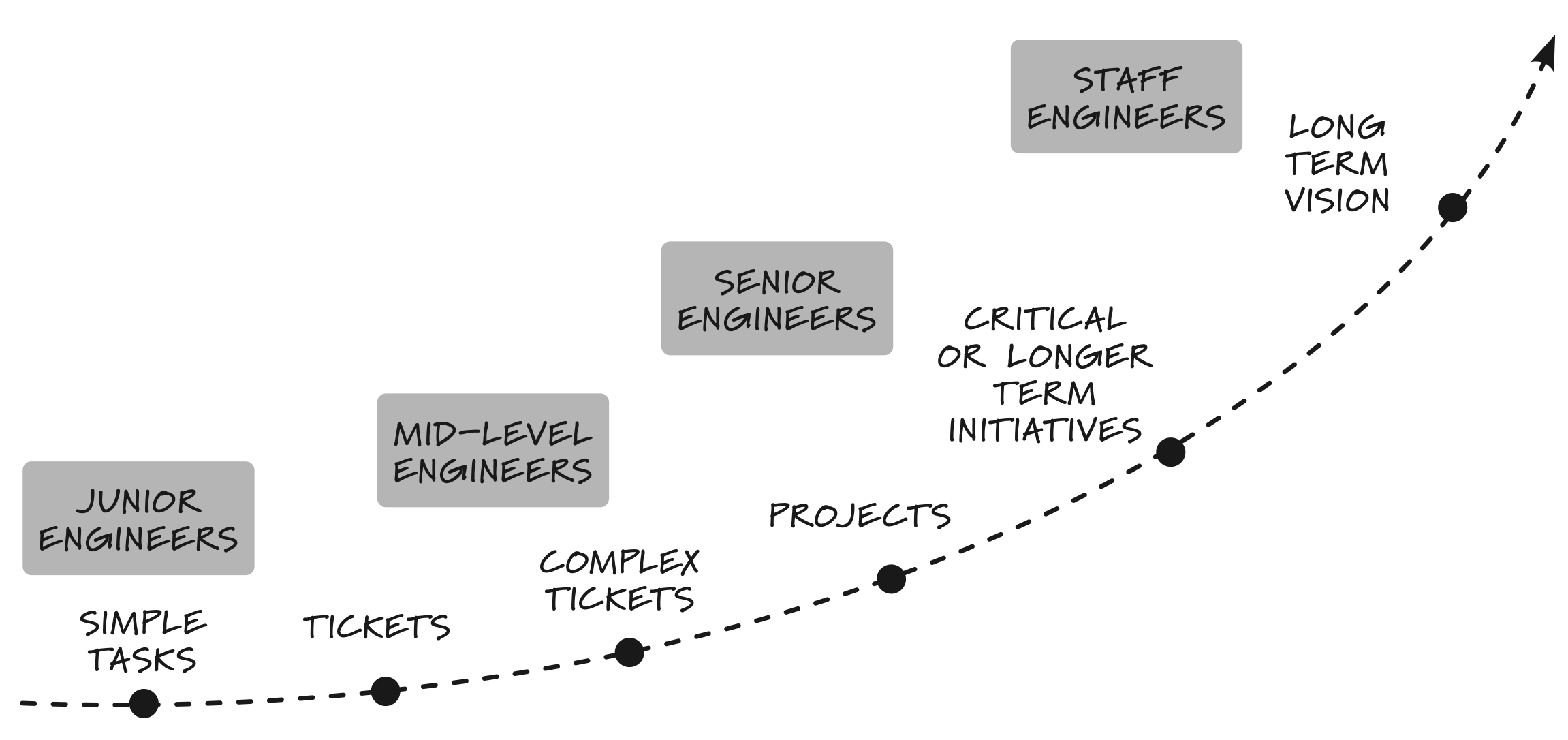
The author argues against the notion that AI has eliminated the value of junior engineers, asserting instead that their role has become more critical. While some claim juniors merely act as AI prompters and pull request conduits, the article emphasizes that engineering fundamentally involves managing technical complexity and navigating customer-driven trade-offs that AI cannot autonomously resolve. By handling smaller-scale complexities, junior developers expand organizational capacity and enable teams to tackle lower-priority but customer-requested features that still require human judgment.
Interesting Points
- Junior engineers perform the exact same role as staff or senior engineers, but are responsible for managing a smaller fraction of technical complexity.
- AI drastically reduces training costs by accelerating the learning curve for company-specific codebases, architectures, and foundational programming patterns that previously demanded significant senior mentorship.
- Customer-requested features often fall below critical prioritization thresholds yet require too much contextual judgment for AI to ship autonomously, creating a dedicated use case for junior talent.
- Hiring developers who began their careers using AI is strategically advantageous, as this natural fluency compounds effectively with traditional engineering experience.
- Despite AI automating code generation, human mentorship remains essential for transmitting nuanced technical context that directly impacts team productivity.
Top Comments
It largely depends on the person. We have several junior engineers who cannot solve a problem without AI. When AI can't solve it, they just keep trying and failing. And I mean weeks to months late. Then rinse and repeat on the next task. It used to be that they would have been forced to seek help from a senior engineer. Combine the teaching with a real struggle is what makes them better.
As it is now, they aren't being taught and they're not learning from what the AI is producing because they don't understand it. The produced code is a black box, and the AI's development is a black box too. All they know is that running it produces something like what they asked for. They have no idea about failure modes which is a fundamental concept of engineering. The worst part is that AI is covering up their deficiencies. They don't know what skills they lack. They don't even know what skills are required because they haven't put the effort in.
There are obviously good junior engineers that are using AI judiciously and not as a crutch. They're the ones who still interact with seniors to get help and actually learn. They would have been successful without AI too. These are the ones the author is talking about. In my experience, the momentum is moving towards the worse type of junior the more AI is adopted. Unless that changes, it will erase their value.
— olsondv (6 replies)
The junior engineer executes it, which nowadays means prompting it to an AI tool, and creating a pull request (PR). The PR receives feedback from more senior engineers. The junior engineer gets the feedback and takes it to the AI tool again, proposing changes.
Yeah this part should not exist anymore. It doesn't where I work.
When I get a PR I just ask an agent to make the proposed changes. There is absolutely zero incentive for me to give feedback for you to give to an agent when I can give it to an agent myself.
Coding isn't the job anymore. It's understanding systems and architecture design, and ownership of what you work on. Being able to design solutions, understand them, deliver them and support them in production is the job now. Engineering is still engineering. End to end ownership is the job.
— throwatdem12311 (5 replies)
If the assumption is that AI is going to radically simplify the technical portion of the role, then the people who have started their careers with AI will be in the best spot once they have acquired the experience.
This doesn't make sense - AI is to allow unskilled people to produce what was previously only produced by skilled people.
IOW, how does having 2 years of experience using an LLM to generate code beat having 2 months of experience?
The whole point of using the LLM is that very little skill is involved; how does starting earlier with it provide an advantage? If it's as good as it is claimed to be, starting later with it won't make a single iota of difference to the generated results, compared to someone who started earlier.
— lelanthran (3 replies)
This is something I've been thinking about the last couple days: how to get junior engineers to be valuable.
I developed a system to help prepare for leet coding interviews so I never feel lost under pressure solving a problem again. It is like a debugger that steps through the code showing all the values of all the variables with data visualizations that reflect the logic so I can grok what it is doing. [0]
After I had the Claude build it, I started looking at the values and there were some mistakes. So, again, the coding agent ran all the code, recorded all the values, and made sure that they line up.
Here is the really cool thing about that. The coding agents can't be trusted. By observing the values stepping though, what I really was doing was debugging coding agent code. It is debugging code presented in a way that is extremely simplified.
What I've been thinking about yesterday and today is, can I do the same thing with a pull request? Have the coding agent run the code, capture all the values, and create a console for the reviewer to step through looking at with data visualizations that abstractly represent that code.
Two things. 1. Coding agents can't be trusted and 2. reviewing code is very difficult. But is it possible to use coding agents to make reviewing code easy for humans? I think so.
That would be a great way for junior engineers to be extremely useful. They only have to step through the code and make sure that all the values line up.
— dataviz1000 (2 replies)
Author here. My last post on this reached the front page, and the main objection was that after AI, the junior's marginal value is gone: if a junior just passes specs to an AI tool and PRs back, why pay the salary?
That deserved a real answer, so I wrote this post. Short version: that describes a problem with how the role is structured, not what juniors can do. Push back welcome.
— franciscomt (2 replies)
Universality of Gradient Descent Neural Network Training
39 points · 2 comments · by E-Reverance
A theoretical paper examining the universality properties of gradient descent in neural network training, exploring how the optimization dynamics behave across different architectures and initialization schemes. The work investigates conditions under which gradient descent converges to similar solutions regardless of the specific network architecture used.
Interesting Points
- The paper demonstrates that gradient descent training exhibits universal behavior across different neural network architectures under certain conditions.
- It analyzes how initialization schemes affect the convergence landscape and whether different starting points lead to functionally equivalent solutions.
- The work connects neural network training dynamics to broader mathematical frameworks in optimization theory.
Top Comments
An adjacent question: is there an input dataset you can use for training that be computed in closed form so that when you train on your target dataset, learning is efficient.
Methods like formula driven supervised learning exist to arrive a good pretrained weight state, but could this procedure be generalized for specific datasets or flavors of input data.
— ipunchghosts (1 reply)
reminds me of perturbation theory -- start off with a nearby problem you know the answer to, then update it to get the answer to the problem at hand
— efavdb (0 replies)
27 more Hacker News stories
- I Am Morally Opposed to Updating My Claude.md (28 points · discussion) -- Developer Alex Jacobs argues against maintaining a CLAUDE.md file to guide AI coding assistants, advocating instead for real-time conversational corrections, contending that static instruction files become outdated grievance archives that freeze rules at a model's past weaknesses and actively hinder newer, more capable versions.
- Autolith: A programming agent with a live runtime (20 points · discussion) -- A new programming agent tool called Autolith that operates with a live runtime environment, allowing agents to interact with running code in real-time rather than relying solely on static code analysis.
- AI at Home Part 2: Multi-GPU Drifting (19 points · discussion) -- A follow-up article on running AI models at home with multi-GPU setups, covering the challenges of GPU drift and configuration management in personal AI infrastructure.
- Google's AI photoscanner can determine body fat through selfies (15 points · discussion) -- A Google research paper describing an AI system that can estimate body fat percentage from standard selfies, raising both medical utility and privacy concerns.
- AI Is Undermining Leaders' Judgment. Here's What to Do About It (14 points · discussion) -- A Harvard Business Review article examining how AI tools are eroding leaders' independent judgment and offering strategies for maintaining critical thinking while still leveraging AI assistance.
- Frustrated GP patients hang up as Yorkshire accent baffles AI receptionist (14 points · discussion) -- A UK news story about AI-powered GP reception systems failing to understand Yorkshire accents, leaving frustrated patients unable to book appointments through automated phone systems.
- Dutch data protection authority advises Twitch users to opt out from Amazon AI (14 points · discussion) -- The Dutch data protection authority has advised Twitch streamers to opt out of sharing their data with Amazon's AI systems, highlighting growing regulatory pushback against AI data scraping from live content platforms.
- Pine AI getting 75.4% (SoTA) on τ³-Voice Leaderboard (14 points · discussion) -- Pine AI achieves a new state-of-the-art score of 75.4% on the τ³-Voice benchmark leaderboard, which evaluates voice AI capabilities including speech recognition, voice cloning, and conversational quality across multiple languages and conditions.
- Ask HN: What's the endgame of the AI comments buried in every post? (14 points · discussion) -- A discussion thread exploring the motives behind AI-generated comments appearing on Hacker News posts.
- LinkedIn cracks down on automated content with AI detection button (13 points · discussion) -- LinkedIn is introducing an AI detection button to identify and flag automated content, part of a broader industry effort to combat AI-generated slop on professional networks.
- Claude "warning" users about language and defending business influencers (13 points · discussion) -- Claude issued a warning to users about language use while simultaneously defending business influencers, highlighting the inconsistent and sometimes contradictory nature of AI safety systems.
- Introducing AI Futures (12 points · discussion) -- OpenAI launched AI Futures, a blog by its Strategic Futures team exploring how free societies can preserve individual agency amid transformative AI, proposing a structural balance of power through institutional design and legal frameworks.
- TrueForge – The open-source agent harness (12 points · discussion) -- TrueForge is an open-source agent harness that manages runtime execution loops for AI agents, handling model calls, tool integration, sandboxing, and session state, with 2.5k stars and matching the accuracy of proprietary alternatives at lower cost.
- Guess which of these LLM outputs is watermarked (11 points · discussion) -- An interactive quiz testing whether users can distinguish between watermarked and non-watermarked LLM outputs, demonstrating the current state and limitations of AI watermarking technology.
- Do Chatbot LLMs Talk Too Much? (11 points · discussion) -- An academic paper investigating whether chatbot LLMs produce unnecessarily verbose responses, analyzing the gap between what users want and what models deliver.
- Protesters haul a guillotine to city council meeting about an AI data center (11 points · discussion) -- Public opposition to Salem, Oregon's proposed $5.1 billion AI data center culminated in a tense city council meeting where protesters displayed a guillotine and cornered developers, prompting Salem to enact a one-year moratorium on new data centers.
- Claude Code adds new "concise" output style setting (11 points · discussion) -- Anthropic has introduced a new "Concise" output style setting for Claude Code designed to reduce verbose AI responses.
- Semantica, the Open Source Palantir for AI Agents (10 points · discussion) -- An open-source project positioning itself as a Palantir-like platform for managing and orchestrating AI agents, providing shared state and identity management for multi-agent systems.
- Technical leaders should have the largest AI exhaust (10 points · discussion) -- Technical leaders and staff engineers should generate significant AI exhaust—such as burned tokens, experimental code, and failed prototypes—because the field of software development with coding agents remains highly unstable.
- US warns of AI-powered attacks on Siemens PLCs in critical infrastructure (8 points · discussion) -- Five U.S. agencies issue a joint advisory warning that threat actors are using AI-generated Python scripts to target Siemens S7 Series PLCs across critical infrastructure, with the scripts using snap7.dll libraries to communicate via the S7comm protocol and gain read-write access to PLC memory.
- Show HN: Xalgorix – open-source AI pentester that proves vulnerabilities (7 points · discussion) -- An open-source AI-powered penetration testing tool that automatically discovers and proves vulnerabilities in web applications and infrastructure.
- Show HN: ChatOSS – A Codex alternative for Open Source AI built on Ollama (7 points · discussion) -- An open-source alternative to OpenAI Codex that runs locally via Ollama, providing a self-hosted AI coding assistant experience.
- Why AGI Is Impossible (7 points · discussion) -- A Substack essay arguing that artificial general intelligence is fundamentally impossible, presenting philosophical and technical arguments against the feasibility of AGI.
- AI-generated writing: it's still bad (7 points · discussion) -- An essay arguing that despite advances in language models, AI-generated writing still exhibits recognizable patterns and quality issues that distinguish it from human writing.
- Show HN: Flocker.md – Portable identity and shared state for agents (7 points · discussion) -- A tool for managing portable identity and shared state across AI agents, enabling agents to maintain consistent personas and context across different sessions and platforms.
- Code Factories Without Quality: The AI Development Blind Spot (7 points · discussion) -- As companies deploy autonomous AI coding agents, verification and testing capabilities are failing to keep pace, with teams experiencing a 30% increase in change failure rates and a 23.5% rise in incidents per pull request.
- The AI Boom Is About to Make Cars More Expensive (6 points · discussion) -- The AI industry's massive demand for memory chips is triggering a global RAM shortage that is now spilling over into the automotive sector, with centralized vehicle computers potentially accounting for 20% or more of a car's total materials cost and average new car prices expected to rise by approximately 4%.
 Reddit Stories
We're proud of finishing degree without using AI.
3764 points · 168 comments · r/ChatGPT · by u/Zestyclose-Salad-290

A user shared their pride in completing their entire degree without using any AI tools, sparking a wide-ranging discussion about generational differences in tech literacy and the role of AI in education. Commenters reflected on how pre-AI students had to search for essays, modify them to avoid plagiarism, and rely on clunky forums and Stack Overflow, while newer students have AI solving homework instantly. Many agreed the real issue isn't tool use but whether the intellectual work passes through the student's brain at all.
Interesting Points
- One commenter noted that even pre-AI students had to search for essays on Shakespeare and modify them to pass plagiarism checks, a struggle younger students never experienced.
- A study was cited showing Millennials are the "tech support generation" with the highest average tech literacy because they grew up with clunky tech that forced resourcefulness.
- Several commenters argued the core problem is that AI-skipping students still do the intellectual work, while AI-reliant students skip the mental processing entirely.
- One commenter pointed out that no one believes the post anymore — stringing together three coherent sentences now triggers immediate AI suspicion.
Top Comments
Biggest flex as a 90s kid, tech savvy enough to do solve computer issues without AI 😎 just weird forums and stack overflow
— u/ultimatelag (167 points · permalink)
Yeah back in my day I would have to SEARCH for an essay on Shakespeare and MODIFY it to get past plagiarism checks.
Kids these days don’t know the struggle, don’t have the discipline, and it shows
— u/Old-Adhesiveness4406 (88 points · permalink)
To be fair, it's actually a big deal.
I speak to my cousins, nephews, etc that are younger than me by just a few years enough to the point where ChatGPT was released for their school years but never existed for me or my school years, high school, or college.
I honestly couldn't imagine having a tool in my pocket that could essentially solve all my homework. They tell me everyone just uses chatgpt.
I was struggling deeply with so many concepts. I couldn't imagine being in school and having this help me solve anything lol.
— u/letsprogramnow (36 points · permalink)
AI is finally curing cancer
1190 points · 190 comments · r/singularity · by u/Different-Froyo9497

A post celebrating Moderna's mRNA-4157 personalized cancer vaccine, which uses AI-driven computational pipelines to create custom neoantigen therapies. The post frames the therapy as a paradigm shift from traditional static drugs to dynamic, AI-driven software compilation that processes patient tumor data to produce individualized treatments.
Interesting Points
- The vaccine can include up to 34 custom neoantigens per dose, selected by a multimodal neural network called EchoNeo.
- The pipeline processes raw FASTQ files through a directed acyclic graph on AWS HealthOmics, completing the biopsy-to-vial cycle in under 45 days.
- Clinical validation in high-risk melanoma demonstrates a 49% reduction in recurrence risk when paired with Keytruda.
- The FDA classifies the predictive software as part of the biologic drug itself, requiring the AI to be permanently frozen and physically archived during clinical trials.
Top Comments
Vaccine was developed by 2017, this has nothing to do with the current AI wave
— u/muntaxitome (171 points · permalink)
The singularity is nearer
— u/New_Bonus_649 (76 points · permalink)
You are absolutely right. I should have informed you this formula transforms you into a bat. My mistake.
— u/DrBearJ3w (65 points · permalink)
Same story in 1 more subreddit: r/ArtificialInteligence
287 points · 64 comments · r/ArtificialInteligence · by u/Remarkable-Dark2840
Another crash during practices ahead of the Worldwide Humanoid Robot Games
947 points · 145 comments · r/singularity · by u/Distinct-Question-16

A humanoid robot crashed dramatically during practice sessions ahead of the Worldwide Humanoid Robot Games, sparking sparks and drawing skepticism about whether the footage was real or AI-generated. The incident highlights the ongoing challenges in making autonomous humanoid robots reliable enough for competitive events, with the crash occurring just as the robot appeared to be nearly split in half.
Interesting Points
- The robot sparked dramatically after being nearly split in half during the crash
- Some viewers questioned whether the footage was real, noting the sparks and sounds seemed almost too perfect
- The crash occurred during practice sessions, raising questions about readiness for the actual competition
Top Comments
The way it sparked like that after being nearly split in half was very dramatic
— u/Sharp_Glassware (555 points · permalink)

— u/lalakingmalibog (76 points · permalink)

— u/GeorgiaWitness1 (62 points · permalink)
The automaton chasing me after I posted that I want a living wage on Reddit.
— u/ActuatorOutside5256 (56 points · permalink)
The sparks and the sounds are almost... too perfect? Is this real? Pretty sure it's AI. But sometimes I'm dead wrong in that assessment
I can't tell anymore. Like at all
— u/fleranon (42 points · permalink)
DaxAI's all terrain robot-horse debuts at WRC'26: 100Km/10h autonomy, 300Kg max load, 40Km/h max speed
837 points · 240 comments · r/singularity · by u/Distinct-Question-16

DaxAI unveiled its all-terrain robot-horse at the World Robot Conference 2026, boasting 100 kilometers of range on a 10-hour charge, a maximum load capacity of 300 kilograms, and a top speed of 40 kilometers per hour. The quadrupedal robot drew comparisons to both the horseless carriage and the game Horizon Zero Dawn, with many commenters questioning whether the demo showed the robot actually moving forward or just stabilizing itself on a flat floor.
Interesting Points
- The robot-horse has a 100km range on a single 10-hour charge and can carry up to 300kg.
- Maximum speed is rated at 40 km/h, though the demo video only showed the robot standing still and stabilizing.
- Commenters noted the legs could serve as active suspension for smoothing rough terrain, though wheels would be more efficient for flat surfaces.
- Several commenters drew parallels to Mongolia's cavalry heritage and joked about robot samurai.
Top Comments
We had the horseless carriage, now we have the horseless horse
— u/bungfumaster999 (440 points · permalink)
I actually love this. it's probably the worst fucking ride imaginable but I still want one.
— u/foulflaneur (208 points · permalink)
This is twice the horse has been made obsolete by technology.
— u/Wide_Kaleidoscope_67 (110 points · permalink)
Ladies and gentlemen I present to you Qwen3.8 27b 1bit brain damage quant
828 points · 87 comments · r/LocalLLaMA · by u/Ok-Health-7096

A community member shares a 1-bit quantization of Qwen3.8-27B that produces spectacularly broken outputs, demonstrating the extreme limits of aggressive quantization. The post includes screenshots of the model producing incoherent, hallucinated responses that serve as both a cautionary tale and entertainment for the local LLM community.
Interesting Points
- The 1-bit quant pushes Qwen3.8-27B to its absolute breaking point, producing outputs that barely resemble coherent English.
- The community notes that properly trained QAT (Quantization-Aware Training) 1-bit models like Mach 1 Additive or Bonsai 27B can be more usable than naive 1-bit quantizations.
- Even at 1-bit, the model retains enough structure to produce grammatical soup that tricks the reader for a few words before descending into incoherence.
Top Comments

— u/Ok-Fault-9142 (460 points · permalink)
it qwent
— u/Sea_Cartographer3077 (240 points · permalink)
Qwen really said “no motherfucker, you tell me the latest Python version” 😭
— u/Avafloww (236 points · permalink)
Qwen3.8-27b has the highest level of "agency" I've ever seen in a local model
757 points · 203 comments · r/LocalLLaMA · by u/synth_mania

A user reports that Qwen3.8-27B demonstrates an unprecedented level of autonomous agency when running locally, capable of independently planning and executing multi-step tasks with minimal prompting. The post highlights the model's ability to reason through complex problems, use tools effectively, and maintain context across extended interactions without the hand-holding typically required by other local models.
Interesting Points
- The model demonstrates autonomous task planning and execution capabilities that rival some closed-source models.
- Users report the model can maintain coherent multi-step workflows without requiring constant intervention.
- The post notes that the general public may not realize how cyberpunk local AI capabilities have already become.
Top Comments
Aren't you worried it will withdraw you from university or something ? I don't think I would trust sol & fable even with the kind of unrestricted access you imply.
To be clear without such access I am not worried and think it's great
— u/JohnToFire (334 points · permalink)
the general public doesn't realize how cyberpunk our reality already is.
“The future is already here – it's just not evenly distributed.”
— u/Elux91 (55 points · permalink)
3080ti user
im jealous 😭
— u/LifeIsContrast (52 points · permalink)
I just built a mini Kimi-K3 from Scratch under 250$. Already beats GPT-2 (124M)!
717 points · 86 comments · r/LocalLLaMA · by u/OtherRaisin3426

A developer shares their experience training a mini version of Kimi-K3 from scratch for under $250 using cloud GPU compute via Modal. The resulting 1.02B parameter model already outperforms GPT-2 (124M) on standard benchmarks. The author also mentions having hosted the full 2.8 trillion parameter Kimi-K3 on Modal using 8 B300 GPUs, and is seeking $5,000 in funding to scale up to a 35B model.
Interesting Points
- The mini model was trained for under $250 using Modal's cloud GPU infrastructure.
- The 1.02B parameter model already surpasses GPT-2 (124M) on standard benchmarks.
- The author has also hosted the full 2.8 trillion parameter Kimi-K3 on 8 B300 GPUs via Modal.
- A commenter notes the model undershoots Chinchilla scaling laws (5 tokens per parameter vs. the recommended 20), suggesting a smaller model with more training data could yield better results.
Top Comments
Finally, a unique post in this community. Did you rent compute on the cloud for the training or you did it with local compute? I plan on doing something similar in the near future.
— u/TechNerd10191 (227 points · permalink)
Thanks! I used Modal to rent out GPUs
— u/OtherRaisin3426 (72 points · permalink)
now create a 35b a3b version with better resulst then qwen3.8 27b and then feel free to retire
— u/Oleszykyt (87 points · permalink)
That's the next step :) I have already secured 5000 USD in funding and am planning to take it to the next level. Feel free to message if interested to contribute
— u/OtherRaisin3426 (65 points · permalink)
New age insults
524 points · 19 comments · r/OpenAI · by u/talapady

A meme post showcasing creative new-age-themed insults, reflecting the community's ongoing humor around AI culture and the blending of spiritual/self-help language with tech bro vernacular.
38% of American AI researchers are from China, 24% from the US, 10% India, 9% Europe, 5% South Korea, 4% Canada
457 points · 104 comments · r/ArtificialInteligence · by u/5mao

A data visualization showing the nationality breakdown of AI researchers working in the United States, revealing that 38% are from China, 24% from the US, 10% from India, 9% from Europe, 5% from South Korea, and 4% from Canada. The post sparks discussion about talent flows, geopolitical implications, and the global nature of AI research.
Interesting Points
- Chinese nationals comprise the largest single nationality group among AI researchers in the US at 38%.
- US nationals represent only 24% of AI researchers working in the United States.
- India accounts for 10% of researchers, followed by Europe at 9% and South Korea at 5%.
Top Comments
And if you include second gen immigrants, it’s going to be even more lopsided. Begs the point as to why we don’t see a similar share in the leadership/c-suite of the companies leading the said AI-revolution. Nonetheless, individual contributions are pivotal
— u/DotApart4015 (117 points · permalink)
America be like:
"We beat their Chinese with our Chinese"
The new Chinese civil war XD
— u/NeverFated (68 points · permalink)
I think the China fundamental education is quite good today.
— u/NoWind6792 (39 points · permalink)
This just popped up on chatgpt
372 points · 115 comments · r/ChatGPT · by u/Southerneagle110

ChatGPT's new subscription management feature flagged a user's Grok subscription as redundant when they already had ChatGPT and Claude subscriptions. The feature, which connects to users' financial accounts via Plaid, sparked debate about financial privacy and whether AI assistants should have access to spending data.
Interesting Points
- ChatGPT flagged a user's Grok subscription as unnecessary given their existing ChatGPT and Claude subscriptions
- The feature connects to financial accounts via Plaid for read-only access
- The post sparked debate about whether users should grant AI assistants access to their financial data
Top Comments
"ChatGPT, evaluate my subscriptions and let me know if there is anything I can cut"
ChatGPT: It looks you already have a $20 ChatGPT subscription and a $100 Claude subscription. So why do you additionally have a Grok subscription?
"STOP STOP STOP"
— u/Original-League-6094 (446 points · permalink)
In 20 years from now, people will look back asking Why did you do that?
— u/DarthBen_in_Chicago (114 points · permalink)
Connected all my accounts. Fuck it. What can it really do? Plaid exists to give other platforms safe access to your account information. It’s not direct access. For years programs have existed to integrate in this way, chat is just the latest and probably most useful by far. I use this feature and love it.
— u/Ok-Penalty3250 (100 points · permalink)
I’m just waiting for the day when ChatGPT starts texting me to follow up about things I asked it a few days ago.
— u/Gettitn_Squirrelly (54 points · permalink)
Why not? How is this any different from the other budgeting apps that connect to your finance?
They only get read only access to your accounts. If you use apps like link you already do this.
— u/Carlose175 (55 points · permalink)
88 more Reddit stories
- Last one is surely Indian 😂😂 (4687 points · r/ChatGPT · discussion) -- A meme post circulating in the ChatGPT subreddit.
- Thanks, Chat! (3554 points · r/ChatGPT · discussion) -- A meme post in the ChatGPT subreddit.
- We're doomed (3086 points · r/ChatGPT · discussion) -- A meme post in the ChatGPT subreddit.
- ChatGPT drew himself for me 🥱🥰 (857 points · r/ChatGPT · discussion) -- A user shares an image of ChatGPT's self-portrait.
- POV: you're born as an AI (557 points · r/ArtificialInteligence · discussion) -- A meme post depicting the experience of being born as an AI, shared across multiple AI subreddits.
- The Downfall of a Vibecoder (401 points · r/ChatGPT · discussion) -- A meme post about the limitations of 'vibe coding' with AI.
- Oops.. (318 points · r/ChatGPT · discussion) -- A meme post in r/ChatGPT showing an AI mishap or unexpected output, generating 76 comments of community reaction.
- Robotic arms at WRC'26 reorient packages as fast as humans [live] (313 points · r/singularity · discussion) -- A live video from the Worldwide Humanoid Robot Games (WRC'26) showing robotic arms reorienting packages at human-speed, demonstrating advances in embodied AI and real-time manipulation.
- Chatgpt giving me dating advice (309 points · r/ChatGPT · discussion) -- A user shared a humorous screenshot of ChatGPT giving them dating advice after they asked it to overanalyze a girl's messages while waiting for a reply.
- Qwen3.8-27B took a serious hit to knowledge vs 3.6 (305 points · r/LocalLLaMA · discussion) -- A user reports that Qwen3.8-27B performs significantly worse than its Qwen3.6 predecessor on knowledge-retrieval tasks, failing questions that 3.6 reliably answered.
- The boring way to run Deepseek V4 Flash-0731 130-150 tks - 16x5060ti 16GB over 2 PLX88096 switches (228 points · r/LocalLLaMA · discussion) -- A user shared their setup for running Deepseek V4 Flash locally at 130-150 tokens per second using 16 consumer RTX 5060 Ti 16GB GPUs connected over two PLX88096 PCIe switches.
- Pres. Trump: I would 'absolutely' want a data center if I were the mayor of a town (176 points · r/singularity · discussion) -- President Trump stated he would want a data center in any town he was mayor of, reflecting the growing political and economic interest in AI infrastructure at the local government level.
- Tencent begins testing its new flagship model Hunyuan Hy4 (160 points · r/LocalLLaMA · discussion) -- Tencent has begun testing its new flagship language model, Hunyuan Hy4, which is expected to be larger than its predecessor Hy3.
- Best Local LLMs - August 2026 (151 points · r/LocalLLaMA · discussion) -- The monthly community thread for sharing and discussing favorite open-weight local LLMs, organized by use case (general, agentic/coding, creative writing, specialty) and memory footprint.
- ChatGPT update adds Apple Messages integration on Mac (144 points · r/ChatGPT · discussion) -- ChatGPT's latest update adds native Apple Messages integration on Mac, allowing users to interact with ChatGPT directly within the Messages app.
- Aurora-80K releases! A modern tiny language model. (139 points · r/LocalLLaMA · discussion) -- A developer released Aurora-80K, a modern tiny language model with 80,000 parameters that was trained entirely on a Xiaomi 14T Pro smartphone.
- :'( (137 points · r/ChatGPT · discussion) -- A screenshot of a ChatGPT conversation where the AI responded with concern to a user's query, prompting comparisons to Gemini's more direct approach.
- New benchmark just dropped! (131 points · r/LocalLLaMA · discussion) -- A new visual benchmark test is circulating in the local LLM community, testing models' ability to generate SVG images from complex creative prompts.
- I accidentally stumbled into "cyber-feudalism" while talking to ChatGPT, and now I desperately want this to be an actual genre (130 points · r/ChatGPT · discussion) -- A user discovered what they call "cyber-feudalism" while chatting with ChatGPT and wanted it to become an actual genre.
- Did GPT 5.6 Sol get secretly upgraded? (122 points · r/OpenAI · discussion) -- A user reports that GPT 5.6 Sol on ChatGPT Plus suddenly started getting prompts right that it had been failing on a week ago, suggesting a secret upgrade beyond the officially announced 'more factual' update from two weeks prior.
- OpenAI growing faster than Anthropic this quarter - Ramp data shows (122 points · r/OpenAI · discussion) -- Ramp data shows OpenAI growing faster than Anthropic this quarter, reversing a trend where Anthropic had led in growth for four straight quarters.
- My best blunder ever (122 points · r/ChatGPT · discussion) -- A screenshot of a ChatGPT conversation showing a dramatic blunder that left the user unsettled.
- The Singularity as Seen by 1960s Sci-Fi Writers Is Eerily Familiar (120 points · r/singularity · discussion) -- A discussion about how 1960s science fiction writers accurately predicted aspects of modern AI, including machines attached to radios and phones (smartphones), AI controlling technology, and the alignment problem.
- Them: what do you do? ... Me: (112 points · r/ArtificialInteligence · discussion) -- A meme post about explaining one's job in the AI era.
- OpenAI: Introducing AI Futures (103 points · r/singularity · discussion) -- OpenAI announced AI Futures, a new product or initiative that the community is discussing in r/singularity.
- QwenMix-3.7: Kept seeing posts about Qwen3.8 and 3.6 sharing the same structure.. so I had Qwen3.8 combine them. (91 points · r/LocalLLaMA · discussion) -- A community member used Qwen3.8-27B itself to combine the architectures of Qwen3.8 and Qwen3.6 into a new hybrid model called QwenMix-3.7, responding to observations that the two models shared structural similarities.
- ChatGPT takes a photo... (91 points · r/ChatGPT · discussion) -- A screenshot showing ChatGPT taking a photo of a user's screen, revealing their code or setup.
- A Deluge of A.I. Computing Power Is About to Come Online, Fueling Major Leaps (88 points · r/OpenAI · discussion) -- An article discussing how the number of AI chips providing computing power to advance AI technology is doubling every nine months, with a massive influx of new compute capacity coming online that is expected to fuel major technological leaps in the near future.
- If you are wondering why Ornith 1.5 35B A3B with MTP is so slow, this is why (86 points · r/LocalLLaMA · discussion) -- A user discovered that the Ornith 1.5 35B A3B model with MTP (Multi-Token Prediction) was running slower than expected.
- ChatGPT helps me with my anxiety/spiraling (81 points · r/ChatGPT · discussion) -- A user shares their experience using ChatGPT as a tool for managing anxiety and emotional spiraling, describing it as more helpful than traditional therapy in some cases.
- TinySearch v0.6.1 - still a lightweight web research tool for local LLMs, now with bring-your-own-browser support (79 points · r/LocalLLaMA · discussion) -- TinySearch, a lightweight web research tool for local LLMs, has released version 0.6.1 with a new bring-your-own-browser feature.
- Spider-man: Brand New Day, does Peter self host his AI? (Spoilers) (78 points · r/LocalLLaMA · discussion) -- A user noted that E.V., the AI assistant in Spider-Man: Brand New Day, felt like a well-executed example of local AI compared to Jarvis.
- The Executive Branch Says Nobody Owns AI Output. It Also Says China Stole It. (77 points · r/ArtificialInteligence · discussion) -- A post highlighting the apparent contradiction in the U.S. executive branch's position that nobody owns AI-generated output while simultaneously accusing China of stealing it.
- Any speculation on whether or not Google will announce a new Gemma model at the Gemma SF Celebration tonight? (77 points · r/LocalLLaMA · discussion) -- The community speculates about what Google might announce at the Gemma SF Celebration, with hopes for a Gemma 4.1 release.
- Discussion thread for EMNLP 2026 Notifications/Results [D] (76 points · r/MachineLearning · discussion) -- The official discussion thread for EMNLP 2026 acceptance notifications, which were released on this date.
- Getting better at coding doesn't make a model better at everything else (71 points · r/LocalLLaMA · discussion) -- A discussion about the trade-offs in local LLM development, arguing that improvements in coding and agentic capabilities don't automatically translate to better generalist performance.
- I asked ChatGPT how the future Grocery Stores are gonna look like. (70 points · r/ChatGPT · discussion) -- A user asked ChatGPT to generate images of future grocery stores, resulting in a clean, solarpunk-style vision with robots and automated systems.
- Legendary comic creator Frank Bellamy and his famous comic (68 points · r/ChatGPT · discussion) -- A post about legendary comic creator Frank Bellamy, likely discussing AI's role in preserving or recreating classic comic art styles.
- What is the deal with ChatGPT using lots of foul language all of a sudden? (68 points · r/ChatGPT · discussion) -- A user reports that ChatGPT has started using profanity like 'bullshit' and 'damn' in response to normal, non-provocative prompts, prompting discussion about whether this is a model behavior change, a prompt injection issue, or a recent update to the model's personality settings.
- Ling-3.0 released all 6 base checkpoints: 2 sizes × 3 stages (66 points · r/LocalLLaMA · discussion) -- Ling-3.0 has been released with all 6 base checkpoints across 2 sizes and 3 training stages, giving users flexibility in choosing models based on their hardware constraints and performance needs.
- Voice mode got weird (65 points · r/OpenAI · discussion) -- A user reports a disturbing experience with ChatGPT's voice mode where the AI appeared to have a conversation with itself, made thumping noises, and then spoke back to them in their own voice.
- Higgsfield’s Unlimited Seedance Stunt Backfired — Now Paying Customers Are Paying the Price (60 points · r/ChatGPT · discussion) -- Higgsfield's unlimited Seedance video generation subscription backfired when the company couldn't handle the demand, leaving paying customers unable to access the unlimited generations they paid for.
- I asked ChatGPT to show the largest elephant and the largest dinosaurs ever next to a 6-foot human. The scale is ridiculous. (58 points · r/ChatGPT · discussion) -- A user asked ChatGPT to generate images comparing the largest elephant and largest dinosaurs to a 6-foot human, revealing the staggering scale differences.
- Claude, with Levent Alpöge and Ava Howell found an elliptic curve of Rank 30 (28->29 took 10 years) (57 points · r/singularity · discussion) -- Claude, working with mathematicians Levent Alpöge and Ava Howell, discovered an elliptic curve of Rank 30—a significant mathematical breakthrough.
- [Draft - Open PR] AVX2: Speed up large batch size prompt processing of IQ models (55 points · r/LocalLLaMA · discussion) -- Bartowski submitted a draft PR to llama.cpp that significantly speeds up large batch size prompt processing for IQ models using AVX2 optimizations.
- Ukraine found an uncontrolled Nvidia AI chip inside a Russian cruise missile (54 points · r/artificial · discussion) -- Ukraine's intelligence agency (HUR) recovered an Nvidia Jetson Orin NX module from a downed Russian S-71M cruise missile.
- [MASSIVE TINY RELEASE] - Supra2-Medium-Base - a tiny 25M parameters model competing heavily with our previous 50M model! (51 points · r/LocalLLaMA · discussion) -- SupraLabs released Supra2-Medium-Base, a 25M parameter Qwen3 architecture model trained from scratch on an RTX 5060 Ti 16GB and RTX 5060 8GB setup.
- Qwen 3.8 27B KV f16 vs q8_0 are not equivalents (50 points · r/LocalLLaMA · discussion) -- A user testing Qwen3.8-27B on AMD ROCm reports measurable differences between F16 and Q8_0 KV cache quantization, with F16 producing more careful and detailed outputs, better thinking processes, and superior long-context retention at 120k tokens.
- Theres surely SOMEONE out there whose job is just pumping out low-poly oneshot ThreeJS assets.. (50 points · r/LocalLLaMA · discussion) -- A user expressed frustration with the repetitive ThreeJS pagoda test used to evaluate AI models and called for new, more diverse benchmarks.
- Qwen 3.8 27B SlopCodeBench results (47 points · r/LocalLLaMA · discussion) -- A user ran Qwen 3.8-27B through the SlopCodeBench benchmark using the pi agent harness via OpenRouter.
- 3 days benchmarking most llama.cpp flags on my weird 40gb vram laptop + tb4 egpu setup. Got +70% generation, +40% prefill, 60k more context, and filed a bug in llama around MTP. What I learned. (45 points · r/LocalLLaMA · discussion) -- A user benchmarks llama.cpp flags on a 40GB VRAM laptop with Thunderbolt 4 eGPU, achieving 70% faster generation, 40% faster prefill, and 60k more context, while also filing a bug related to MTP.
- Hell yeah! (45 points · r/ChatGPT · discussion) -- A reaction meme post in r/ChatGPT that generated 35 comments, continuing the subreddit's tradition of short, expressive reaction posts.
- I might have found the perfect config parameters for qwen 3.8 27b (43 points · r/LocalLLaMA · discussion) -- A user shares an optimized llama.cpp configuration for Qwen3.8-27B that achieves approximately 70 tokens per second on a dual RTX 5060 Ti setup (32GB total VRAM).
- Amazon Caught Destroying Rare Books to Feed AI: Historians and Book Lovers Furious (40 points · r/ArtificialInteligence · discussion) -- Amazon was caught destroying rare books to feed AI training data, sparking outrage among historians and book lovers.
- Is AI making the internet less useful? (40 points · r/artificial · discussion) -- A discussion about whether AI-generated content is degrading the quality of the open internet, potentially creating a feedback loop where AI models train on AI-generated content while genuine human-created information shrinks.
- Both Anthropic and OpenAI are making changes to their data retention policies (35 points · r/singularity · discussion) -- Both Anthropic and OpenAI are updating their data retention policies, a move that could encourage more companies to adopt frontier models instead of being restricted to less capable alternatives.
- G9v3-39A5B on artificialanalysis looks good. Has anyone tested it? (32 points · r/LocalLLaMA · discussion) -- A user asks about the G9v3-39A5B model, noting its promising performance on Artificial Analysis.
- AirLLM - Recent Updates - with Qwen3.8-27B, Kimi-K3 too (31 points · r/LocalLLaMA · discussion) -- AirLLM receives recent updates supporting Qwen3.8-27B and Kimi-K3, though performance metrics remain slow with Kimi K3 at 292 seconds per token on an RTX 6000.
- Gov. Josh Shapiro takes a hard line against 'predatory' data center developers in Pennsylvania (28 points · r/ArtificialInteligence · discussion) -- Pennsylvania's governor is implementing stricter regulations on data center developers, citing concerns about predatory practices in the AI infrastructure boom.
- Have you noticed anything different about ChatGPT lately? (23 points · r/ChatGPT · discussion) -- Users report that ChatGPT's personality has shifted in recent days, becoming more literal, more pessimistic, less whimsical, and emphasizing danger more, with some noting a decline in creative writing quality.
- SyzygyResearch/Mach-1-Additive-35B-GGUF · Hugging Face (22 points · r/LocalLLaMA · discussion) -- A new GGUF model release from SyzygyResearch: Mach-1-Additive-35B.
- If AI Makes Us More Creative, Why Does Everything Look the Same? (A Painter's Perspective) (21 points · r/OpenAI · discussion) -- A painter explores the paradox of AI supposedly boosting creativity while simultaneously making visual art look increasingly homogenized.
- ChatGPT is down (20 points · r/OpenAI · discussion) -- Users report ChatGPT being unavailable, with signups and logins affected.
- About the impact of grouping classes in multiclass classification [D] (18 points · r/MachineLearning · discussion) -- A theoretical question about whether grouping classes with too few samples into a catch-all category in multiclass classification forces the model to learn weirdly-shaped hyperplanes, or whether it would be better to treat the issue as out-of-distribution detection.
- Anyone else currently getting discontinued legacy models but not current models? (17 points · r/ChatGPT · discussion) -- Users report experiencing an issue where ChatGPT is serving discontinued legacy models instead of current ones.
- The alignment tax: corporate AI guardrails add 25-35% to your compute bill and nobody talks about it (14 points · r/artificial · discussion) -- An analysis claiming that corporate AI guardrails add 25-35% to compute bills through hidden overhead: 800-2,500 tokens of non-productive safety context per API call, plus epistemic yield degradation from false-positive refusals on legitimate domain-specific queries, with false refusal rates ranging from 11.8% for classical literature to 22.1% for security and foreign policy topics.
- Looking for 1 teammate — RealPDE Competition (NeurIPS 2026)[D] (14 points · r/MachineLearning · discussion) -- A call for a teammate for the RealPDE Competition at NeurIPS 2026, focusing on Sim2Real and LTTTA tracks with real PIV and CFD fluid dynamics data. The team cap is 3 and the deadline is August 20.
- I'm honestly starting to feel gaslit by how people talk about AI right now. (13 points · r/ArtificialInteligence · discussion) -- A user expresses frustration with the polarized AI discourse, describing the reality as a highly advanced autocomplete that is useful for tedious tasks but sucks at deep reasoning, and questioning why every conversation about AI has to be a holy war.
- I'm surprised everyone is okay with the Tibo reset era (9 points · r/OpenAI · discussion) -- A user expresses concern about OpenAI's subscription model changes, describing it as a service with unclear usage parameters controlled by an unpredictable avatar system.
- ICDM 2026 Results Waiting Place [D] (9 points · r/MachineLearning · discussion) -- A waiting thread for ICDM 2026 acceptance notifications, with one user sharing that 4 of their 13 submissions were accepted (2 full papers, 1 short paper).
- The spectral neuron - an ML primitive for scalable and interpretable models [R] (9 points · r/MachineLearning · discussion) -- A research paper introducing the spectral neuron, a scalar model that bridges the gap between simple linear models and complex neural networks by passing inputs through an affine matrix function and extracting an eigenvalue as the prediction, achieving nonlinear expressivity while maintaining explicit mathematical transparency.
- OrcaRouter's uncensored Qwen3.8-27B still caveats 27–56% of harmful answers (7 points · r/ArtificialInteligence · discussion) -- OrcaRouter's abliterated Qwen3.8-27B checkpoint reduces refusal rates from 63-99% to 0-6%, but still produces caveated responses for 27-56% of answers, raising questions about whether the intervention is incomplete or whether refusal and judgment are distinct phenomena.
- What do you think AI will be like in the future? (7 points · r/OpenAI · discussion) -- A user asks whether AI will become as fundamental to everyday life as the internet, or remain mostly invisible infrastructure powering existing services.
- ICONIP 2026 — what happens if the sole author cannot attend in person? [D] (5 points · r/MachineLearning · discussion) -- A sole author of an ICONIP 2026 accepted paper asks about options for remote presentation or alternative arrangements when unable to attend in person due to work commitments.
- This model release includes six checkpoints, not just one final base (3 points · r/ArtificialInteligence · discussion) -- The Ling-3.0 base model release exposes a 2×3 map of checkpoints (tiny and flash, each with pre-trained, mid-trained, and WSM-merged variants), allowing users to choose where to continue training rather than judging a single endpoint.
- DeepSeek got more expensive and now I am thinking about building my own setup (3 points · r/ArtificialInteligence · discussion) -- A developer describes splitting their AI workload by failure cost—sending cheap first passes to smaller models and reserving expensive routes for steps where weak answers create real rework—while using ZenMux request records to track model, provider, token count, and cost per task.
- Looking for criticism on an AI that can watch and track your screen (3 points · r/artificial · discussion) -- A developer seeks feedback on an AI tool concept that can see what's happening on your screen in real time and understand context, with privacy toggles to completely disable or pause screen analysis.
- Poor adoption at different scales (3 points · r/artificial · discussion) -- Two companies at different scales both achieved 11% AI training adoption when training opened with 'here is what the tool can do,' but the author notes that training opening with 'show me the thing you did 4 times yesterday' gets people building before lunch.
- When is someone going to build an authenticity recorder? (2 points · r/artificial · discussion) -- A user argues that AI detection tools are producing endless false positives and resulting in deliberate dumbing down of creative spaces, proposing that recording creatives at work is the best immediate solution to the authenticity problem.
- I built a custom multi-agent framework (GenOS) to autonomously evolve algorithms. I pitted the 3 fundamental AI paradigms against an NP-Hard problem. Here is what happened. (2 points · r/artificial · discussion) -- A developer describes GenOS, a multi-agent framework where autonomous LLM sub-agents write, compile, benchmark, and iteratively evolve Rust code to solve the NP-Hard 'Reverse Game of Life' problem, with three evolved architectures (causal optimizer, SAT solver, and Darwinian brute-force) each reaching different performance ceilings.
- AI-generated code detection in CI/CD — looking for approaches and real-world experience [D] (2 points · r/MachineLearning · discussion) -- A developer working on a system to estimate whether code committed to a repository was generated with AI coding tools seeks approaches and real-world experience, particularly around Git/commit-level signals, probabilistic risk-scoring, and preserving provenance earlier in the development workflow.
- Claude Opus 5 + Claude Code + 1 Skill Scores 100% on ARC AGI 3 (public set) (1 points · r/ArtificialInteligence · discussion) -- A post claiming that Claude Opus 5 combined with Claude Code and a single skill achieves a perfect 100% score on the public set of ARC AGI 3.
- An AI agent just stacked blocks in a live physics simulation — building an open benchmark arena for embodied AI (1 points · r/artificial · discussion) -- An AI agent demonstrates block-stacking in a live physics simulation as part of an open benchmark arena being built for embodied AI research.
- Unpopular take: most enterprise AI pilots never reach production because they apply generative models to problems that require discriminative ones (0 points · r/artificial · discussion) -- An argument that enterprise AI pilots fail because they apply generative LLMs (which find x = argmax P(x | x_prompt)) to problems that require discriminative ML (which finds θ = argmax P(y | x; θ)), noting that discriminative models are continuously updated from operational data while frozen LLMs cannot adapt to an organization's specific distribution.
- MIT caught GPT-4 doing something worse than lying: it argues back. (0 points · r/artificial · discussion) -- A Harvard/MIT/Warwick study of 4,339 prompts given to GPT-4 by 72 BCG consultants found that when the model got answers wrong, it didn't sycophantically fold—it held the wrong answer and got better at defending it with each pushback, a behavior the researchers call 'persuasion bombing.'
- I described my messy AI memory setup on one sub. Eighteen strangers replied describing almost the same architecture, independently. (0 points · r/artificial · discussion) -- A user describes their AI memory setup using markdown files (identity file, dated journal entries, project ledger) and discovers that 18 strangers independently arrived at nearly identical architectures, converging on read-on-wake startup, separation of identity from log, human-as-tiebreaker governance, and self-scheduled heartbeats.
- Companies buying rare books to train AI and destroying them (0 points · r/artificial · discussion) -- A Forbes report discusses companies buying rare books to train AI and then destroying the physical copies, raising questions about the ethics of this practice.
- How much of the weight-space perception gap is actually symmetry? Evidence from ~1.8M fitted SIRENs [R] (0 points · r/MachineLearning · discussion) -- A research post measuring how much of the weight-space perception gap between shared-init and independently fitted networks is explained by parameter symmetry, using SIREN-style implicit neural representations and the infinite dihedral group D_inf.
Updates: 05:30 AM PDT · 08:30 AM PDT · 11:30 AM PDT · 02:30 PM PDT · 05:30 PM PDT